Falcon Environmental Solutions provides mechanical and structural upgrades for pollution control equipment including thermal oxidizers, RTOs, catalytic oxidizers, and scrubber systems. From refractory replacement to complete ductwork redesigns, we restore and improve equipment performance to keep your facility in compliance.
Pollution control equipment operates in some of the harshest conditions found in industrial facilities. Thermal oxidizers sustain combustion chamber temperatures above 1,400 degrees Fahrenheit. Scrubber systems handle corrosive chemical streams. RTOs cycle ceramic heat exchange media through extreme thermal gradients thousands of times per day. Ductwork carries hot, particulate-laden, and often corrosive gas streams from the process to the control device and from the control device to the stack. Over time, this service takes a toll on every component in the system. Falcon Environmental Solutions provides the mechanical and structural upgrades that keep your pollution control equipment operating reliably and in compliance with your air permits.
Refractory repair and replacement is one of our most frequently requested upgrade services. The refractory lining inside a thermal oxidizer combustion chamber insulates the steel shell from process temperatures that would quickly destroy it. Refractory degrades over thermal cycling, chemical attack, and mechanical erosion. Cracks allow hot gas to reach the steel shell, creating hot spots visible on infrared surveys. Spalling reduces the insulating thickness and increases shell temperature. Failed refractory sections expose the shell to direct flame impingement. Our refractory services include infrared thermographic surveys to identify degradation before it becomes critical, targeted patch repairs for localized damage, and complete relining for systems where the refractory has reached end of life. We specify castable, brick, and ceramic fiber refractories based on the specific temperature, chemical, and mechanical requirements of each application.
Ductwork upgrades address the corrosion, erosion, and structural fatigue that accumulate in the piping systems connecting your processes to your pollution control equipment. Carbon steel ductwork exposed to acid gases corrodes from the inside. Stainless steel ductwork in high-temperature service can experience sensitization and intergranular corrosion. Ductwork carrying particulate-laden streams erodes at bends and transitions. Thermal expansion causes fatigue cracking at rigid connections. Falcon Environmental Solutions evaluates your existing ductwork, identifies sections that need replacement or reinforcement, and designs upgraded ductwork using materials appropriate for your specific process conditions: carbon steel, 304 or 316 stainless steel, duplex stainless steel, FRP (fiberglass reinforced plastic), or specialty alloys. We manage the fabrication and installation of the new ductwork sections, ensuring quality welds and proper fit-up.
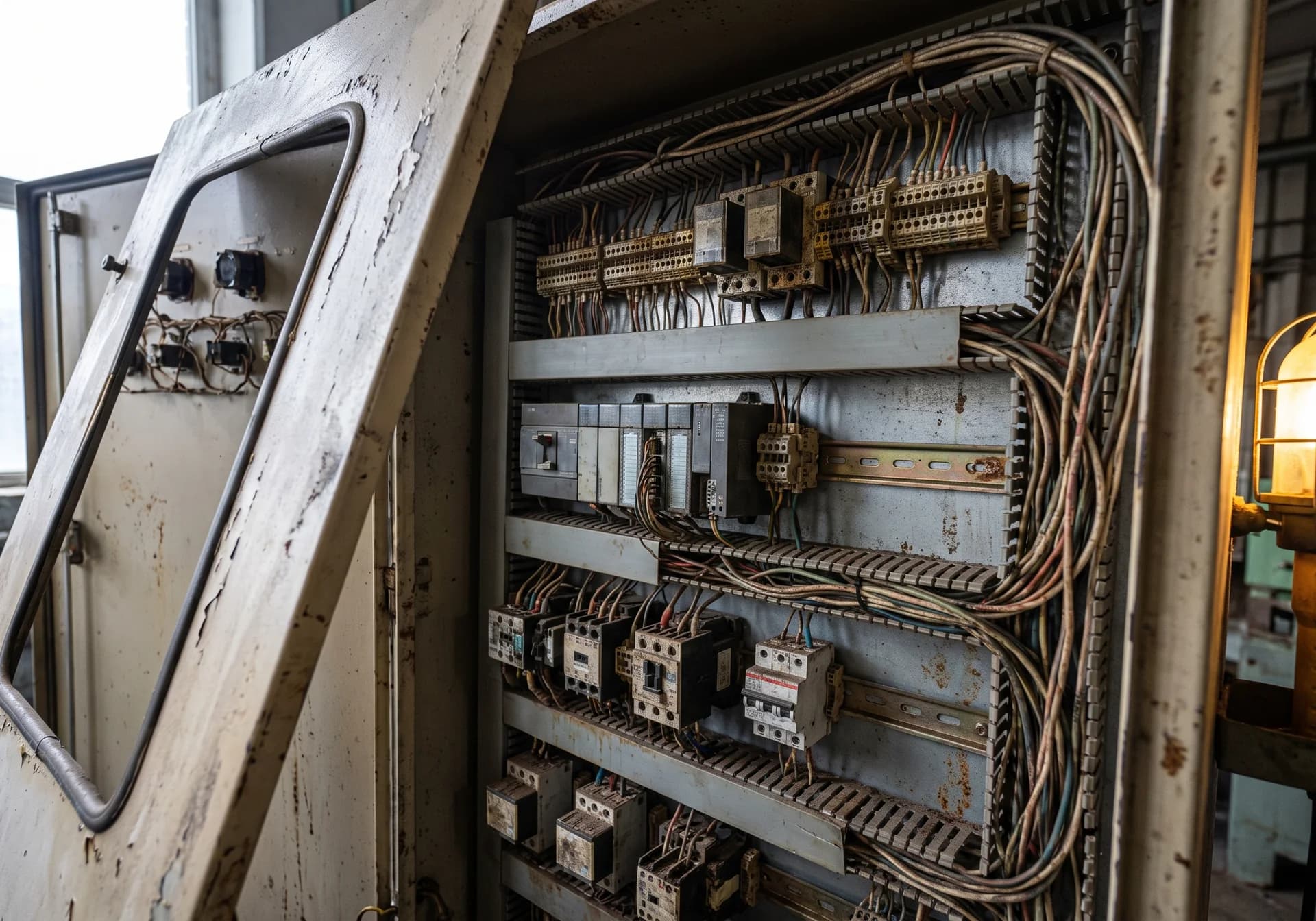
Valve and damper upgrades improve process control and reduce fugitive emissions from your pollution control system. Isolation valves, diverter valves, bypass dampers, and modulating control dampers are mechanical components that wear over time. Valve seats erode, damper seals degrade, actuators lose calibration, and linkage assemblies develop excessive play. These degraded components allow process gas to bypass the control device (reducing destruction efficiency), create fugitive emission points, and prevent the system from responding properly to load changes. We replace worn valves and dampers with properly sized, properly specified components and verify that the new equipment integrates correctly with the existing control system.
Burner upgrades range from replacing worn components on the existing burner to installing a completely new burner assembly. Burner components that commonly require replacement include gas orifices, air registers, diffuser plates, flame stabilizers, ignition electrodes, and flame detection sensors. When the existing burner cannot meet current emission requirements or the facility needs additional capacity, we specify and install replacement burners from manufacturers including John Zink, Zeeco, Maxon, and Eclipse. Burner upgrades are often combined with fuel train upgrades to bring the complete combustion system into compliance with current NFPA 86 requirements.
Heat recovery system improvements capture waste energy from your pollution control equipment and return it to the process. Recuperative thermal oxidizers use shell-and-tube or plate-type heat exchangers to preheat the incoming process gas stream with energy from the hot exhaust. These heat exchangers degrade over time due to fouling, corrosion, and thermal fatigue, reducing their heat recovery efficiency and increasing fuel consumption. RTO heat recovery media (ceramic saddles or structured media) can break down, compact, or become fouled with particulate or organic deposits, increasing pressure drop and reducing thermal efficiency. We evaluate heat recovery system performance, identify degradation, and implement upgrades that restore or improve energy recovery.
Fan and blower replacements ensure your pollution control system maintains the correct airflow for proper operation. Process fans, combustion air blowers, and exhaust fans are the workhorses that move gas through the entire system. Bearing wear, impeller erosion, motor degradation, and VFD failures all reduce fan performance over time. An undersized or degraded fan cannot maintain the required airflow through the control device, which reduces destruction efficiency and can cause operating problems. We specify replacement fans and blowers based on the actual system pressure drop and flow requirements, select motors with appropriate service factors, and coordinate the installation to minimize downtime.
Insulation and cladding work protects both equipment and personnel. Hot surfaces on thermal oxidizers, ductwork, and exhaust stacks create burn hazards for maintenance personnel and waste energy through radiant and convective heat loss. Degraded insulation allows moisture to reach the equipment surface, accelerating corrosion. Missing or damaged cladding exposes insulation to weather damage. Falcon Environmental Solutions installs and repairs insulation systems using mineral wool, calcium silicate, ceramic fiber, or other materials appropriate for the service temperature. Aluminum or stainless steel cladding protects the insulation from weather and mechanical damage. All insulation work considers personnel protection (ASTM C1055 surface temperature limits), energy conservation, and process temperature requirements.
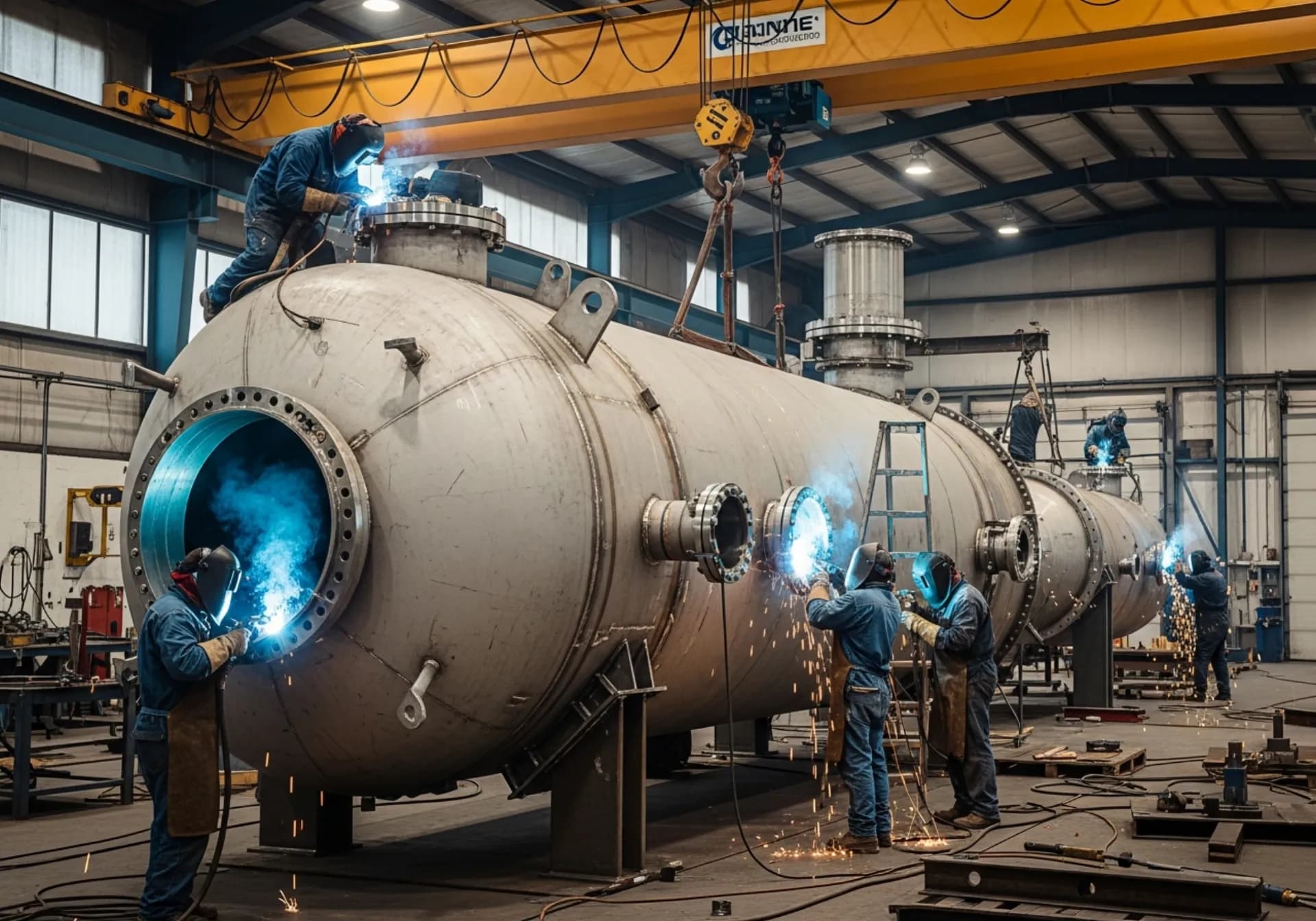
Structural fabrication and installation for major system upgrades is coordinated by Falcon as part of the overall project scope. Heavy fabrication capabilities including structural steel, pressure vessels, tanks, and large-diameter piping complement our pollution control equipment expertise. When a project requires new support steel for a replacement fan, a structural foundation for a new scrubber section, or custom fabricated transitions for ductwork modifications, Falcon manages the fabrication and field installation alongside the overall project engineering and commissioning. Clients get a complete mechanical upgrade capability without engaging multiple independent contractors.
Turndown, scope, and scheduling for system upgrade projects are managed to minimize impact on your operations. We understand that most pollution control equipment cannot be taken offline without affecting the process it serves or the air permit that requires it. Upgrade projects are planned around production schedules, maintenance windows, and regulatory constraints. For projects that require extended outages, we work with your operations team and your environmental compliance team to coordinate the schedule and, when necessary, file deviation reports or obtain temporary permit variances from the regulatory agency.
Refractory specifications follow ASTM standards for castable (C401), firebrick (C27), and ceramic fiber (C892) products with temperature ratings matched to service conditions plus appropriate safety margins. Ductwork design follows SMACNA Industrial Duct Construction Standards and ASME B31.3 for process piping where applicable. Structural steel fabrication follows AWS D1.1 Structural Welding Code. Pressure-containing components follow ASME Boiler and Pressure Vessel Code Section VIII where applicable. Fan selection follows AMCA standards for performance testing and rating. Insulation specifications follow ASTM C547 (pipe), C592 (block), and C612 (blanket) with surface temperature limits per ASTM C1055 for personnel protection. All upgrade projects include as-built documentation, updated P&IDs, and commissioning verification records.
Contact us to discuss your system upgrades requirements and get a tailored proposal for your facility.
Request a QuoteBurner Tuning
Combustion optimization for thermal oxidizers, process heaters, and boilers, delivering lower NOx emissions, reduced fuel consumption, and reliable flame stability across all major burner platforms.
New Unit Construction
Turnkey design, fabrication, and installation of thermal oxidizers, RTOs, catalytic oxidizers, scrubber systems, and flare systems.
NFPA Inspections
NFPA 86 compliance inspections for thermal oxidizers, ovens, furnaces, and all Class A and Class B fuel-fired equipment, with complete documentation for insurance carriers and regulatory agencies.
Engineered for Reliability. Built for the Field.
Why industrial facilities nationwide choose Falcon Environmental Solutions for system upgrades services.
Degraded components reduce destruction efficiency, increase fuel consumption, and cause operating problems. Targeted upgrades restore your pollution control equipment to its design performance without the cost of full system replacement.
Replacing worn components and upgrading vulnerable sections extends the useful life of your pollution control equipment by years or even decades. Strategic upgrades defer the major capital expenditure of full system replacement.
Heat recovery improvements, fan upgrades, insulation repairs, and burner replacements all reduce energy consumption. The fuel and electricity savings from these upgrades often pay for the project within one to two years.
Degraded equipment drifts out of compliance over time. Upgraded components restore the performance margins that keep your emissions within permit limits, preventing the enforcement actions and source test failures that follow equipment deterioration.
Refractory failures, hot surface exposure, degraded flame safety components, and worn dampers all create safety risks. System upgrades eliminate these hazards and bring equipment into compliance with current NFPA 86 and OSHA requirements.
Falcon coordinates the entire upgrade project including engineering, procurement, fabrication, installation, and commissioning. One point of contact manages the full scope from planning through startup.
Our system upgrades services support a wide range of industrial and environmental applications.
Complete combustion chamber relining, burner replacement, and fuel train upgrades for direct-fired thermal oxidizers that have experienced refractory degradation, burner component wear, or need to meet updated NFPA 86 requirements.
Ceramic heat exchange media replacement, poppet valve or butterfly valve upgrades, and damper actuator replacement for regenerative thermal oxidizers experiencing reduced thermal efficiency or excessive pressure drop.
Packing replacement, mist eliminator upgrades, recirculation pump and piping replacement, and corrosion-resistant material upgrades for wet scrubber, dry scrubber, and packed bed scrubber systems handling corrosive gas streams.
Design and fabrication of replacement ductwork sections for corroded, eroded, or undersized piping systems connecting processes to pollution control equipment, with material selection based on process conditions and expected service life.
Heat exchanger tube bundle replacement, fouling mitigation modifications, and thermal efficiency improvements for recuperative thermal oxidizers and waste heat recovery systems that have experienced performance degradation.
Falcon Environmental Solutions delivers system upgrades services engineered for reliability, compliance, and long-term operational value. Contact us to discuss your project requirements and receive a detailed engineering proposal.