Industrial automation, PLC programming, SCADA systems, and environmental compliance solutions for Chicago and the greater Illinois region.
Chicago and the surrounding Great Lakes industrial corridor operate one of the most diverse collections of pollution control equipment in the Midwest. The Calumet Industrial Corridor on the far South Side and extending into northwest Indiana hosts steel mills and metals processors where baghouse dust collectors, wet scrubbers on coke oven gas, and thermal oxidizers on coating line exhaust work continuously to control particulate, VOC, and acid gas emissions from some of the heaviest industrial operations remaining in the United States. Moving north and west into the suburban manufacturing belt, chemical plants, pharmaceutical operations, food processors, and printing facilities operate RTOs, catalytic oxidizers, packed bed scrubbers, and carbon adsorption systems that reflect the remarkable breadth of Chicagoland's manufacturing economy.
The region's relationship with environmental regulation runs deep. Illinois was an early leader in industrial air quality control, and the Illinois EPA maintains rigorous enforcement standards for pollution control equipment performance. The Chicago area's ozone nonattainment status under EPA NAAQS drives additional requirements for VOC and NOx control that affect every thermal oxidizer, catalytic oxidizer, and combustion source in the region. The Metropolitan Water Reclamation District of Greater Chicago (MWRD) adds water-side environmental requirements that affect scrubber blowdown disposal and cooling water treatment at industrial facilities discharging to the Chicago Area Waterway System.
Chicago's position as a transportation and manufacturing hub means that pollution control equipment in the region spans decades of technology. A single facility may operate a new regenerative thermal oxidizer alongside a 30-year-old direct-fired unit and a vintage packed bed scrubber, each requiring different service approaches and different compliance documentation. The age and variety of this equipment base creates persistent demand for service providers who can work across multiple equipment generations, multiple manufacturers, and multiple regulatory frameworks.
Contact us to discuss your industrial automation and environmental compliance requirements for your Chicago-area facility.
Request a QuoteThe major industrial sectors in the Chicago region that depend on reliable process control and environmental monitoring.
The Calumet region steel mills operated by Cleveland-Cliffs (formerly ArcelorMittal) in Burns Harbor and Indiana Harbor, along with dozens of electric arc furnace mini-mills and metals processors, generate intense particulate, VOC, and acid gas emissions that are controlled by large-scale baghouse systems, wet scrubbers, and thermal oxidizers. Coke oven operations produce raw coke oven gas containing benzene, toluene, naphthalene, and hydrogen sulfide that must be treated through desulfurization scrubbers and thermal destruction before atmospheric release. Galvanizing lines produce zinc fume controlled by baghouses, while pickling lines generate hydrochloric acid mist captured by packed bed scrubbers with water or caustic recirculation. The extreme operating environment in steel facilities demands pollution control equipment that can withstand very high temperatures, heavy particulate loading, and continuous vibration. Falcon Environmental Solutions services scrubber systems, performs burner tuning on thermal oxidizers, and conducts NFPA safety inspections on combustion equipment at steel and metals facilities throughout the Calumet corridor.
The Chicago suburbs host a significant cluster of chemical and pharmaceutical operations with substantial pollution control equipment requirements. AbbVie's North Chicago campus operates thermal oxidizers and scrubber systems on process exhaust from API synthesis and formulation operations. Stepan Company in Northfield and specialty chemical producers across the region use catalytic oxidizers and RTOs to destroy VOC emissions from reactor vents, dryer exhaust, and storage tank breathing losses. CITGO's Lemont refinery operates thermal oxidizers and flare systems similar to those found at Gulf Coast refineries. Pharmaceutical facilities present unique challenges for pollution control service because the process exhaust streams often contain chlorinated solvents, active pharmaceutical ingredients, and other compounds that can poison catalytic oxidizer catalyst beds or create corrosive byproducts in thermal oxidizer combustion chambers. Falcon provides specialized service for pharmaceutical and chemical sector pollution control equipment, including catalyst activity testing, corrosion inspection of combustion chambers and heat exchangers, and scrubber chemistry optimization for acid gas removal.
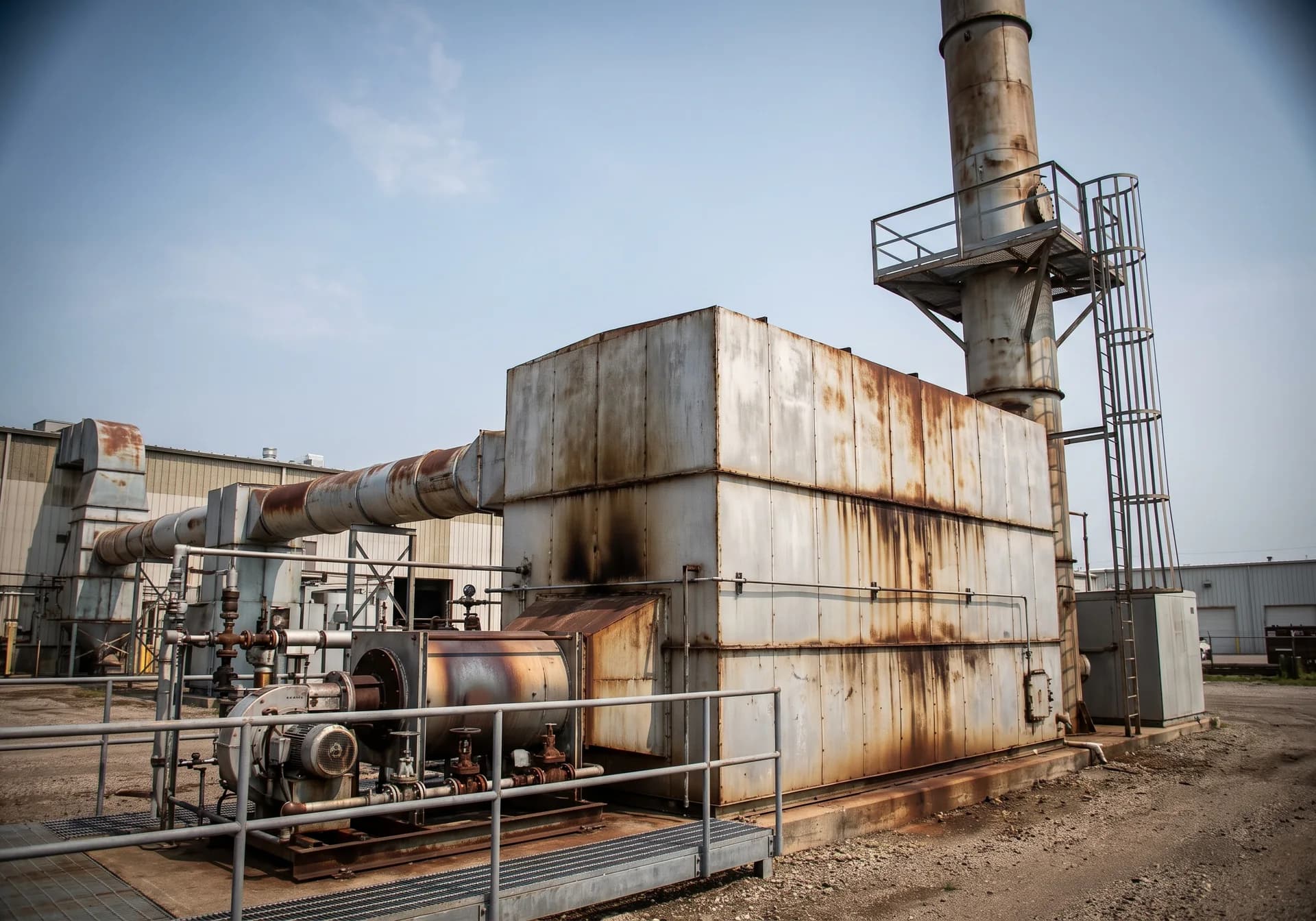
Chicago has historically been one of the largest printing and packaging manufacturing centers in the United States. Web offset, flexographic, and gravure printing operations use solvent-based inks that produce concentrated VOC exhaust streams routed to thermal oxidizers, catalytic oxidizers, or regenerative thermal oxidizers depending on the concentration and flow rate. Corrugated packaging plants operate coating and laminating lines with adhesive application stations that generate additional VOC emissions. Many printing operations in the Chicagoland area have operated their pollution control equipment for 20 years or more, and aging burners, deteriorating refractory, worn valve actuators on RTOs, and spent catalyst beds on catalytic units are common service needs. Falcon performs comprehensive oxidizer refurbishment on aging printing industry equipment, including burner replacement and tuning, refractory repair and relining, RTO media replacement, catalyst bed change-out, and controls upgrades performed in partnership with Creekmist Controls and MAK Solutions to bring legacy systems up to current NFPA 86 safety standards.
Chicagoland's massive food processing sector generates odor and VOC emissions from cooking, frying, roasting, and rendering operations that require control through thermal oxidizers, catalytic oxidizers, or biofilter systems. Ferrara Candy, Wrigley, Blommer Chocolate, and dozens of bakeries and meat processing operations across the region operate emission control equipment on process exhaust stacks. Rendering plants produce some of the most challenging odor control applications, where thermal oxidizers must achieve very high destruction efficiency to eliminate the organic sulfur compounds and fatty acid vapors that generate complaints from surrounding communities. Food processing emissions also carry grease and particulate that can foul RTO ceramic media, plug catalytic oxidizer catalyst beds, and coat heat exchange surfaces, reducing thermal efficiency and increasing fuel consumption. Falcon provides specialized maintenance for food industry pollution control equipment, including media cleaning on grease-fouled RTOs, catalyst bed assessment in high-particulate applications, and burner system tuning that accounts for the variable loading patterns typical of batch cooking operations.
Scrubber systems across Chicagoland serve applications from acid gas removal at chemical plants to particulate control at metals processors to odor management at wastewater treatment facilities. The MWRD's strict pretreatment requirements for industrial dischargers mean that scrubber blowdown water cannot simply be dumped to the sewer without meeting permit limits for pH, metals, and other contaminants. This creates a linked compliance challenge where air-side scrubber performance and water-side discharge quality must be managed together. Packed tower scrubbers, spray tower scrubbers, and venturi scrubbers across the region require regular internal inspection, packing replacement or cleaning, mist eliminator maintenance, recirculation pump service, and instrumentation calibration. Falcon provides comprehensive scrubber maintenance programs that address both air-side removal efficiency and water-side discharge quality, helping Chicago-area facilities maintain compliance with both Illinois EPA air permits and MWRD pretreatment requirements simultaneously.
The compliance landscape for industrial operations in the Chicago region.
Illinois industrial facilities operate under the Illinois Environmental Protection Agency (Illinois EPA), which administers air, water, and land permits through its regional offices. Air emission sources must obtain permits under 35 Illinois Administrative Code (IAC) Parts 201 and 203. The Chicago area is designated nonattainment for ozone under EPA NAAQS, triggering additional requirements for major sources of VOC and NOx, which directly affects the performance standards for thermal oxidizers, catalytic oxidizers, and other pollution control equipment. Illinois EPA requires periodic source testing to demonstrate destruction efficiency and continuous parametric monitoring (typically combustion chamber temperature for thermal oxidizers) as the compliance indicator between tests. NFPA 86 applies to thermal oxidizers classified as industrial ovens and furnaces, requiring documented safety inspections of flame safeguard systems, gas trains, and emergency shutdowns. The MWRD enforces industrial pretreatment requirements through its User Charge and Industrial Waste Surcharge Ordinance, which affects scrubber blowdown discharge, cooling water treatment chemical discharge, and any other water-side waste streams from pollution control equipment. The Chicago Department of Public Health exercises additional authority over air quality within city limits. Federal EPA requirements including NSPS, NESHAP, and MACT standards layer on top of state and local requirements, creating a multi-agency compliance environment where pollution control equipment must satisfy several overlapping regulatory frameworks simultaneously.
Engineered for Reliability. Built for the Field.
Our engineering services tailored to the specific needs of Chicago-area industrial facilities.
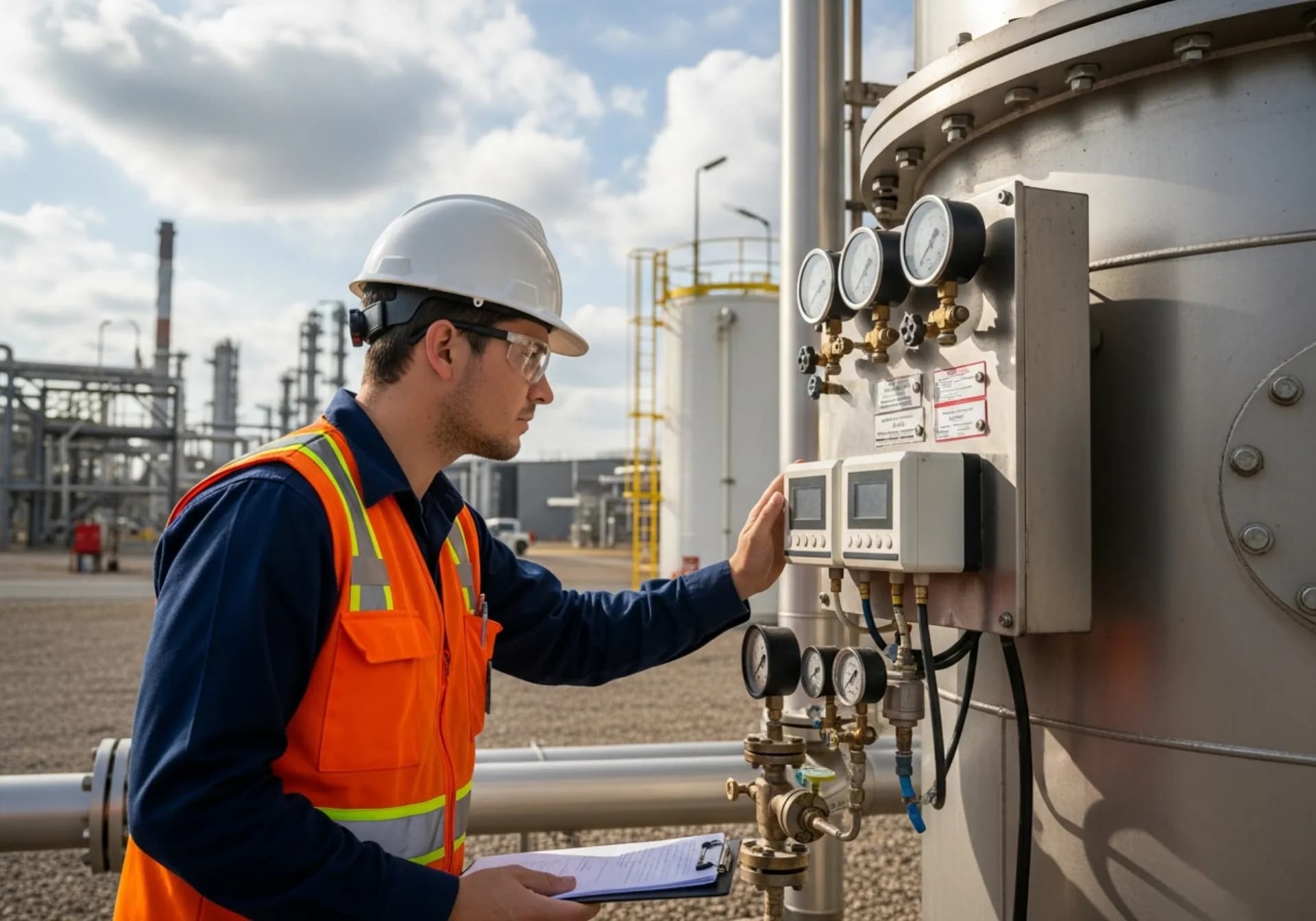
Falcon Environmental Solutions provides Chicagoland manufacturers with comprehensive pollution control equipment service spanning the full range of technologies operating across the region. Burner tuning and combustion optimization cover direct-fired thermal oxidizers, regenerative thermal oxidizers, and catalytic oxidizers on applications from steel processing exhaust to printing press solvent recovery to food processing odor control. NFPA 86 safety inspections document the condition and proper operation of flame safeguard controls, gas train components, combustion air systems, and emergency shutdown interlocks on every combustion-based pollution control device.
Scrubber service programs address packed bed columns, venturi scrubbers, and spray towers with internal inspections, packing replacement, mist eliminator maintenance, and recirculation chemistry management. Environmental consulting services help Chicago-area facilities navigate the overlapping jurisdiction of Illinois EPA, MWRD, and the Chicago Department of Public Health to maintain compliance across air and water permit requirements. For aging pollution control equipment common in Chicago's long-established manufacturing base, Falcon provides system assessments and upgrade recommendations, including refractory relining, RTO media replacement, catalyst bed change-out, and controls modernization performed in partnership with Creekmist Controls and MAK Solutions.
The FalconWatch remote monitoring platform, developed by partner Creekmist Controls, provides continuous visibility into critical pollution control parameters for facilities across the sprawling Chicagoland industrial geography.
Chicago's industrial geography covers a metro area spanning two states and over 10,000 square miles, with pollution control equipment ranging from massive steel mill scrubber systems in the Calumet corridor to precision catalytic oxidizers at suburban pharmaceutical operations. Understanding the Illinois EPA permit process, knowing the MWRD pretreatment program requirements, and maintaining familiarity with the Chicago Department of Public Health's air quality enforcement within city limits are practical advantages that directly affect compliance outcomes. The Midwest climate adds a service dimension that warm-weather regions do not face.
Outdoor pollution control equipment must operate through temperature swings from well below zero in January to over 100 degrees in July, and freeze protection on scrubber recirculation systems, RTO valve actuators, and outdoor ductwork requires winterization expertise specific to Great Lakes conditions. Falcon Environmental Solutions provides Chicagoland clients with the regulatory knowledge and field service capability this diverse market demands.
Falcon Environmental Solutions delivers industrial automation and environmental compliance services engineered for the Chicago market. Contact us to discuss your project requirements and receive a detailed engineering proposal.
Falcon Environmental Solutions provides industrial automation services across the country.