Industrial automation, PLC programming, SCADA systems, and environmental compliance solutions for Houston and the greater Texas region.
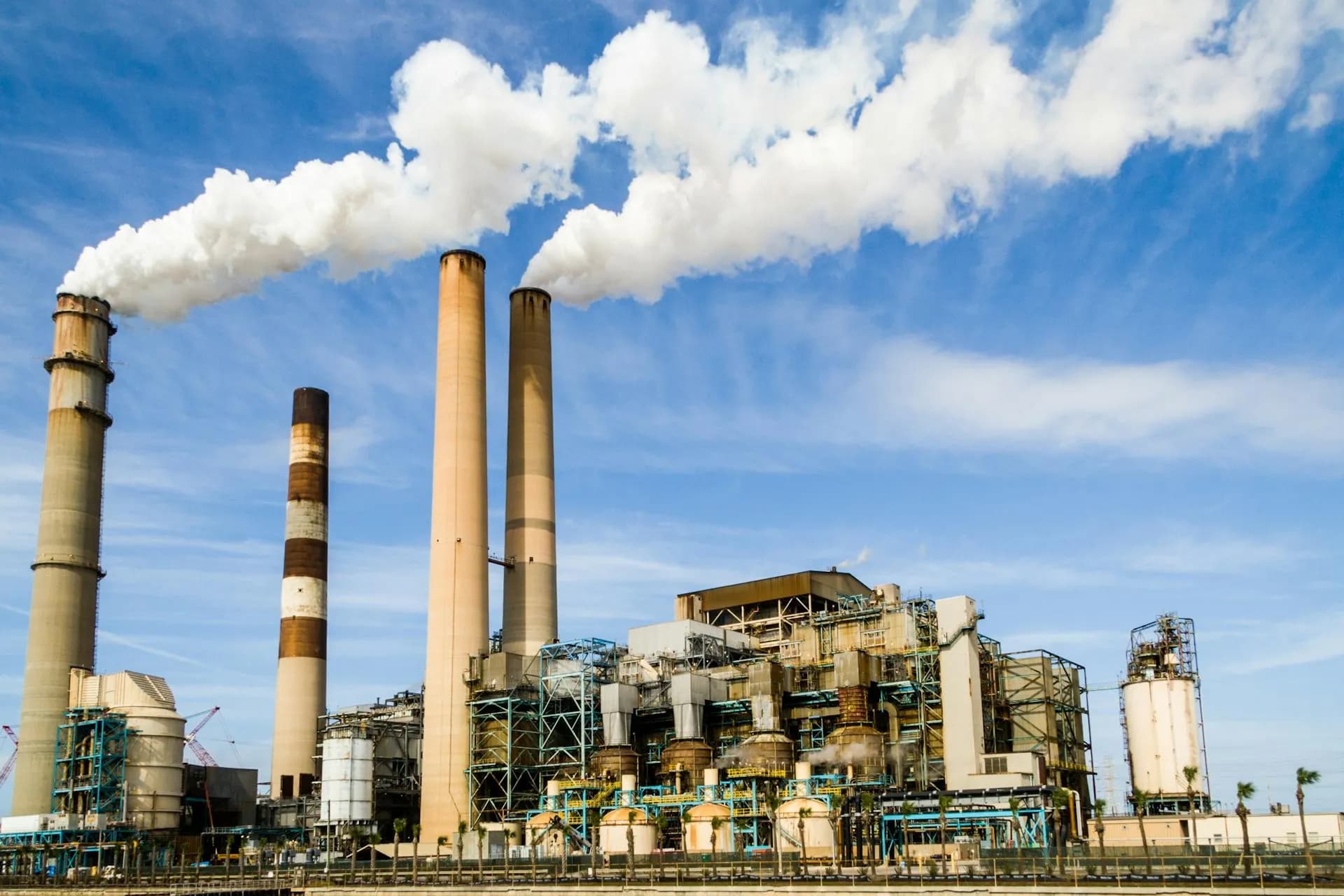
Houston sits at the heart of the largest concentration of pollution control equipment in the Western Hemisphere. The Houston Ship Channel corridor stretches 52 miles from the Turning Basin to Galveston Bay, and within that corridor more than 200 industrial facilities operate thermal oxidizers, regenerative thermal oxidizers (RTOs), catalytic oxidizers, wet scrubbers, dry scrubbers, flare systems, and vapor recovery units that collectively process millions of cubic feet of emissions every hour. Refineries operated by ExxonMobil, Valero, LyondellBasell, Marathon Petroleum, and Shell run some of the largest and most complex pollution control systems in the industry, with individual thermal oxidizer installations handling hundreds of thousands of CFM of process exhaust while maintaining destruction efficiencies above 99%.
The petrochemical corridor extends well beyond the Ship Channel itself. The Pasadena and Deer Park chemical complexes, the Texas City refining district, and the Bayport Industrial District form a dense network of ethylene plants, polymer production facilities, specialty chemical operations, and downstream processors. Every one of these facilities generates volatile organic compound (VOC) and hazardous air pollutant (HAP) emissions that must be destroyed or captured before reaching the atmosphere. The thermal oxidizer and scrubber systems at these plants operate around the clock in extreme Gulf Coast heat and humidity, exposed to corrosive salt air and subject to hurricane-force weather events. Refractory linings degrade, burners fall out of tune, catalyst beds lose activity, and scrubber packing fouls. Without consistent, expert maintenance and service, these pollution control systems drift out of compliance and expose operators to enforcement actions from TCEQ and EPA.
Beyond petrochemicals, the greater Houston area supports natural gas processing plants, LNG export terminals, pipeline compressor stations, and power generation facilities, all of which operate combustion equipment and emissions control systems that require specialized service. The sheer density of pollution control equipment along the Gulf Coast means that Houston-area facilities compete for qualified service providers, and the consequences of deferred maintenance on a thermal oxidizer or scrubber system can escalate from a minor repair to a reportable emissions event in a matter of hours.
Contact us to discuss your industrial automation and environmental compliance requirements for your Houston-area facility.
Request a QuoteThe major industrial sectors in the Houston region that depend on reliable process control and environmental monitoring.
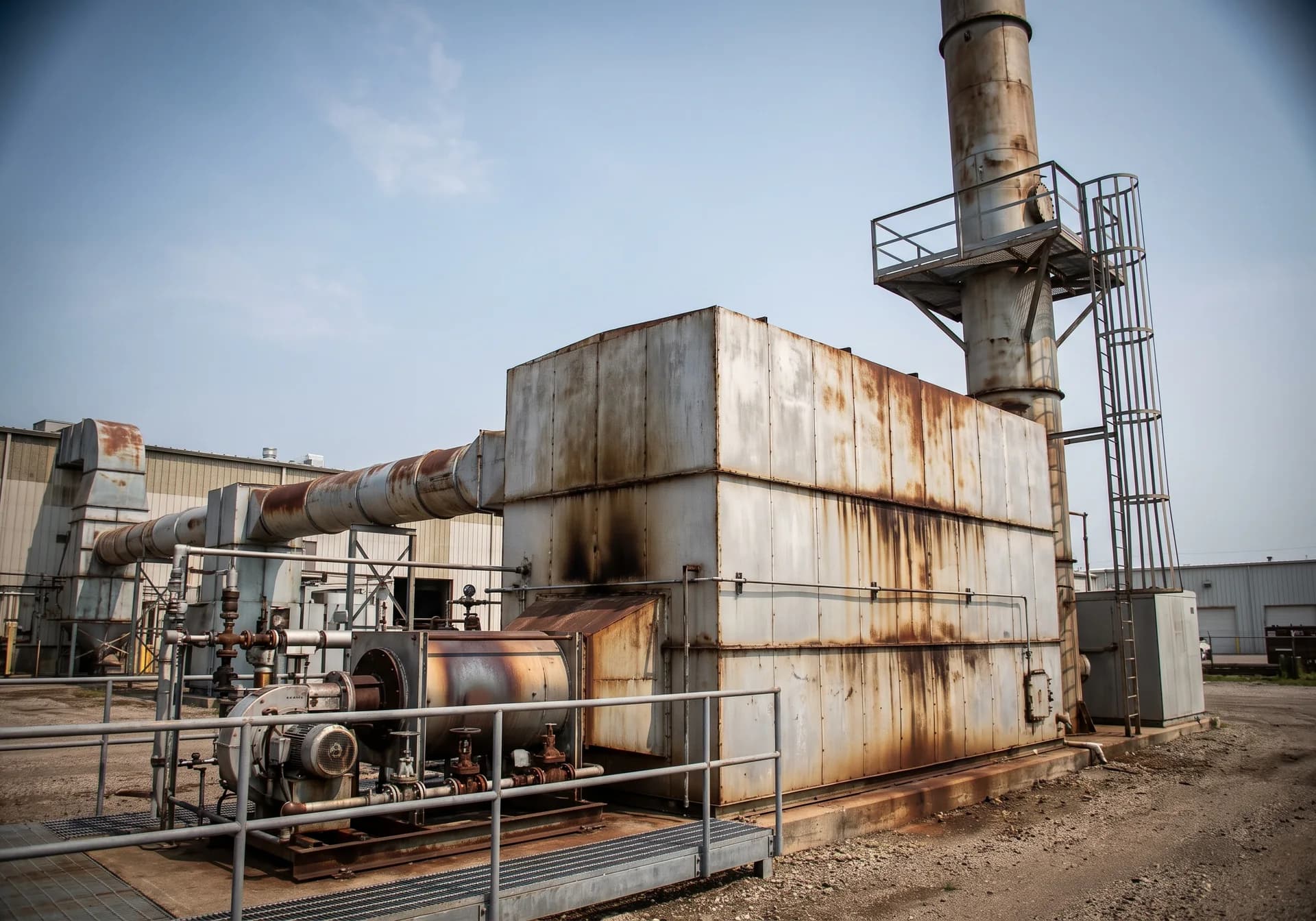
Houston Ship Channel refineries operate some of the largest thermal oxidizer installations in North America. Catalytic crackers, cokers, and alkylation units generate process off-gases containing VOCs and HAPs that must be routed to thermal oxidizers or flare systems for destruction. These oxidizer systems range from simple direct-fired units on individual process vents to massive multi-chamber regenerative thermal oxidizers handling combined exhaust streams from entire process units. Maintaining proper combustion temperature, residence time, and turbulence in these systems is critical to achieving the 98% to 99.9% destruction efficiencies required under TCEQ permits. Burner tuning on refinery thermal oxidizers must account for variable fuel quality, changing process gas composition during unit startups and shutdowns, and the high ambient temperatures that affect combustion air density along the Gulf Coast. Falcon Environmental Solutions performs burner tuning, combustion optimization, refractory inspection and repair, and NFPA 86 compliance assessments on thermal oxidizers throughout the Ship Channel corridor.
Downstream of the refineries, Houston's chemical manufacturing sector produces ethylene, propylene, polyethylene, polypropylene, styrene, and hundreds of specialty chemicals. Plants operated by Dow, BASF, INEOS, Celanese, and Westlake Chemical run continuous and batch processes that generate complex VOC and HAP emission streams requiring destruction in thermal oxidizers or treatment in scrubber systems. Catalytic oxidizers are common at facilities where lower-concentration VOC streams can be treated at reduced temperatures, saving fuel costs while still meeting permit limits. Wet scrubbers handle acid gas emissions from chlorination, HCl production, and sulfur compound processing. These scrubber systems require regular inspection of packing, mist eliminators, recirculation pumps, and pH control systems to maintain removal efficiencies. Falcon provides comprehensive pollution control equipment service for chemical plants, including annual NFPA inspections, scrubber performance evaluations, catalyst testing and replacement, and source testing coordination to verify destruction efficiency during TCEQ compliance demonstrations.
Houston's proximity to the Permian Basin, Eagle Ford Shale, and Gulf Coast pipeline infrastructure makes it a hub for natural gas processing and LNG export. Facilities at Freeport LNG and along the coast operate thermal oxidizers on process vents, acid gas removal systems with amine scrubbers, and combustion equipment including fired heaters and compressor engines that produce NOx and CO emissions requiring control. Selective catalytic reduction (SCR) systems on gas turbines and reciprocating engines need regular catalyst inspection, ammonia injection tuning, and performance verification. Gas processing plants use turboexpanders and fractionation systems where fugitive emissions from valve packing and flange leaks accumulate and must be routed to destruction devices. Falcon's service teams perform burner tuning on fired heaters, inspect and service SCR catalyst beds, tune amine scrubber systems for optimal acid gas removal, and conduct NFPA 86 and NFPA 87 compliance inspections on all combustion-related pollution control equipment at these facilities.
Marine loading terminals, tank farms, and bulk chemical storage facilities throughout the Houston area operate vapor recovery units (VRUs), carbon adsorption systems, and thermal vapor destruction units that control emissions during product loading, unloading, and storage operations. Wet scrubbers at sulfuric acid plants, chlor-alkali facilities, and specialty chemical operations handle corrosive gas streams that rapidly degrade internals if not properly maintained. Packed tower scrubbers require regular inspection of distribution nozzles, packing condition, demister pads, and recirculation chemistry. Venturi scrubbers on particulate-laden streams need throat adjustment verification and pressure drop monitoring. Falcon provides full-service scrubber maintenance programs including annual internal inspections, packing replacement, pump and valve service, instrumentation calibration, and performance testing to verify removal efficiency against permit requirements.
The concentration of regulated facilities along the Houston Ship Channel creates intense demand for pollution control equipment that consistently meets permit limits. TCEQ Highly Reactive Volatile Organic Compound (HRVOC) regulations specific to the Houston-Galveston-Brazoria ozone nonattainment area require automated monitoring with 15-minute averaging periods and immediate upset reporting. When a thermal oxidizer trips offline or a scrubber system loses recirculation, the clock starts immediately on a reportable event. Falcon Environmental Solutions provides pre-test optimization services to ensure pollution control equipment is operating at peak performance before scheduled TCEQ compliance source tests. Our environmental consulting team reviews permit conditions, identifies equipment modifications needed to meet evolving regulatory requirements, and coordinates with third-party source testing firms to manage the entire compliance demonstration process from preparation through final report submission.
The compliance landscape for industrial operations in the Houston region.
Industrial operations in Houston fall under the jurisdiction of the Texas Commission on Environmental Quality (TCEQ), which administers air, water, and waste permits for the state. TCEQ's Region 12 office in Houston directly oversees Ship Channel facilities and maintains one of the most active enforcement records in the state. Houston-area plants must comply with TCEQ Title 30 TAC Chapter 115 rules governing VOC emissions, including the Highly Reactive Volatile Organic Compound (HRVOC) regulations specific to the Houston-Galveston-Brazoria ozone nonattainment area. These HRVOC rules require automated monitoring systems with 15-minute averaging periods and immediate upset reporting when pollution control equipment malfunctions. Thermal oxidizers and catalytic oxidizers must demonstrate destruction efficiency through periodic stack testing under TCEQ Method 25A or EPA Method 25, with parametric monitoring of combustion chamber temperature as the continuous compliance indicator between tests. The Harris County Pollution Control Services Department provides an additional layer of local oversight with independent authority to conduct inspections and issue violations. NFPA 86 (Standard for Ovens and Furnaces) and NFPA 87 (Standard for Fluid Heaters) apply to thermal oxidizer safety systems, requiring documented safety inspections that verify proper operation of flame safeguard controls, combustion air systems, and emergency shutdown interlocks. Federal EPA requirements including NSPS, NESHAP, and the Risk Management Program (RMP) add further layers of compliance obligation for pollution control equipment operators along the Ship Channel.
Engineered for Reliability. Built for the Field.
Our engineering services tailored to the specific needs of Houston-area industrial facilities.
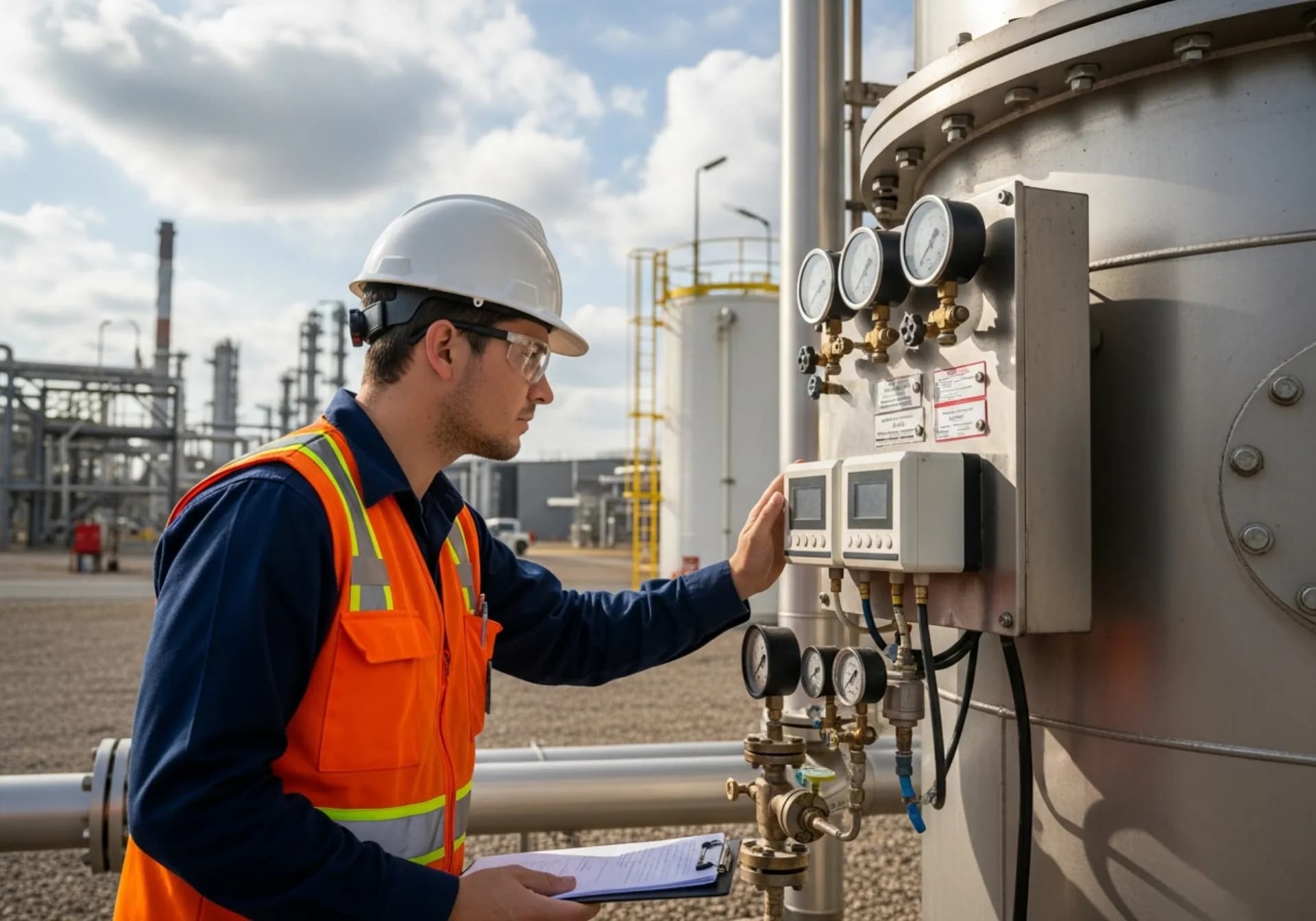
Falcon Environmental Solutions is a pollution control equipment service company serving the Houston Ship Channel corridor and the greater Gulf Coast petrochemical region. Our core services include burner tuning and combustion optimization for thermal oxidizers, RTOs, and catalytic oxidizers operating on refinery process vents, chemical plant exhaust streams, and natural gas processing equipment. We perform NFPA 86 and NFPA 87 safety inspections on all types of combustion-based pollution control equipment, documenting flame safeguard system operation, combustion air damper positioning, gas train valve tightness, and emergency shutdown functionality.
Our scrubber service programs cover packed tower scrubbers, venturi scrubbers, and wet electrostatic precipitators with comprehensive internal inspections, packing replacement, and performance verification. Environmental consulting services help Houston-area facilities navigate TCEQ permitting, prepare for compliance source tests, and develop maintenance programs that keep pollution control equipment consistently within permit limits. For system upgrades and new construction, Falcon designs and installs thermal oxidizer retrofits, scrubber system modifications, and controls upgrades to bring aging equipment into compliance with current regulations.
Controls upgrades are performed in partnership with Creekmist Controls and MAK Solutions, who specialize in PLC and automation integration for pollution control systems. The FalconWatch remote monitoring platform, developed by partner Creekmist Controls, provides continuous visibility into thermal oxidizer combustion temperatures, scrubber differential pressures, and other critical operating parameters, alerting facility managers to performance deviations before they become compliance violations.
Houston is not a market where generic environmental service firms succeed. The concentration of pollution control equipment along the Ship Channel, the unique HRVOC monitoring requirements, the extreme Gulf Coast operating conditions, and the around-the-clock tempo of petrochemical operations demand a service partner with deep local knowledge. When a thermal oxidizer trips offline at 2 AM and visible emissions are generating calls to the TCEQ hotline, response time matters.
Falcon Environmental Solutions maintains the local presence to respond rapidly to emergency service calls across the Ship Channel corridor, from Texas City to Baytown. Our technicians know the facilities, understand the permit conditions specific to each installation, and carry the parts and expertise to get pollution control equipment back online fast. Houston is the energy capital of the world, and the pollution control infrastructure supporting these operations is among the most complex and heavily regulated anywhere.
Falcon delivers the specialized service this equipment demands.
Falcon Environmental Solutions delivers industrial automation and environmental compliance services engineered for the Houston market. Contact us to discuss your project requirements and receive a detailed engineering proposal.
Falcon Environmental Solutions provides industrial automation services across the country.