Industrial automation, PLC programming, SCADA systems, and environmental compliance solutions for New Orleans and the greater Louisiana region.
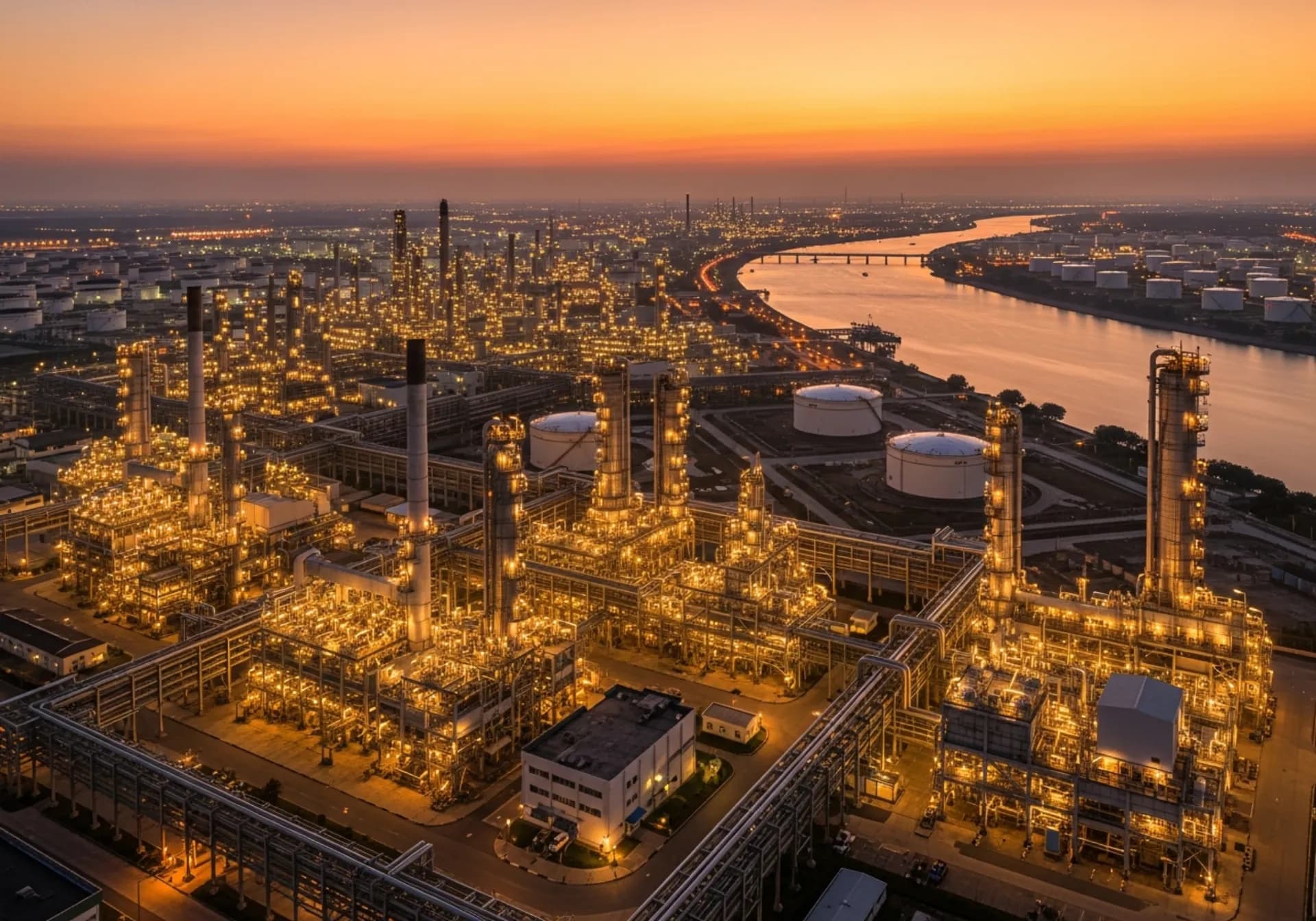
New Orleans and the lower Mississippi River corridor operate pollution control equipment under conditions found nowhere else in the country. The combination of extreme Gulf Coast humidity, tropical storm exposure, salt air corrosion, and the sheer density of petrochemical and chemical manufacturing facilities between New Orleans and Baton Rouge creates a service environment where equipment degradation is accelerated, maintenance windows are compressed by weather, and the consequences of pollution control failure include not just regulatory penalties but intense community scrutiny in one of the most watched environmental corridors in the United States.
The offshore oil and gas support industry headquartered in the New Orleans metro area drives demand for pollution control equipment service at fabrication yards, testing facilities, and onshore support operations in Harvey, Belle Chasse, and Houma. These facilities operate thermal oxidizers on paint booth exhaust from offshore structure coating, blast operations with particulate collection systems, and testing operations where wellhead control panels and safety systems are commissioned before shipment to offshore platforms. The LNG export boom has added a new dimension, with Venture Global's Plaquemines Parish terminal and other Gulf Coast LNG projects operating thermal oxidizers, acid gas scrubbers on amine system vents, and combustion equipment including fired heaters and flares that require specialized pollution control service.
The lower Mississippi River corridor from New Orleans upstream through St. Charles, St. James, and Ascension parishes hosts refineries, chemical plants, and industrial gas operations whose thermal oxidizers, scrubbers, and flare systems operate continuously in the humid, corrosive Gulf Coast atmosphere. PBF Energy's Chalmette Refinery, Shell's Norco Manufacturing Complex, and the chemical storage and distribution terminals along the river collectively represent hundreds of individual pollution control devices that require regular maintenance to maintain performance in an environment that aggressively attacks metal, refractory, catalyst, and instrumentation.
Contact us to discuss your industrial automation and environmental compliance requirements for your New Orleans-area facility.
Request a QuoteThe major industrial sectors in the New Orleans region that depend on reliable process control and environmental monitoring.
Louisiana Gulf Coast LNG export terminals operate some of the newest and most technologically advanced pollution control systems in the region. The gas pretreatment process at LNG facilities uses amine scrubber systems to remove CO2 and H2S from the feed gas before liquefaction. These amine scrubbers require regular monitoring of solution chemistry, foaming tendency, heat stable salt accumulation, and column performance to maintain removal efficiency. Thermal oxidizers on process vents handle hydrocarbon emissions from flash gas, boil-off gas, and tank breathing losses. Fired heaters and combustion turbines at LNG plants produce NOx emissions controlled by selective catalytic reduction (SCR) systems whose catalyst beds require periodic inspection, cleaning, and activity testing. Falcon Environmental Solutions provides amine scrubber optimization, thermal oxidizer burner tuning, SCR catalyst management, and NFPA safety inspections on combustion equipment at LNG terminal operations throughout the Louisiana Gulf Coast.
Fabrication yards in the Harvey Canal corridor and along the Gulf Coast build, modify, and repair offshore platform modules, subsea equipment, and marine vessels. These facilities operate paint booth thermal oxidizers on coating line exhaust, abrasive blast particulate collection systems, and welding fume extraction equipment. The thermal oxidizers at fabrication yards handle variable loading patterns as different coating operations run on schedules driven by offshore installation weather windows. Paint booth exhaust composition varies with the specific coating systems used for different offshore applications, from epoxy primers to polyurethane topcoats to specialty fireproofing materials, each producing different VOC concentrations and compositions. Falcon tunes burner systems for the variable-load applications common at fabrication facilities, performs NFPA 86 inspections on paint booth oxidizers, and provides refractory inspection and repair on equipment exposed to the corrosive salt air environment of coastal Louisiana facilities.
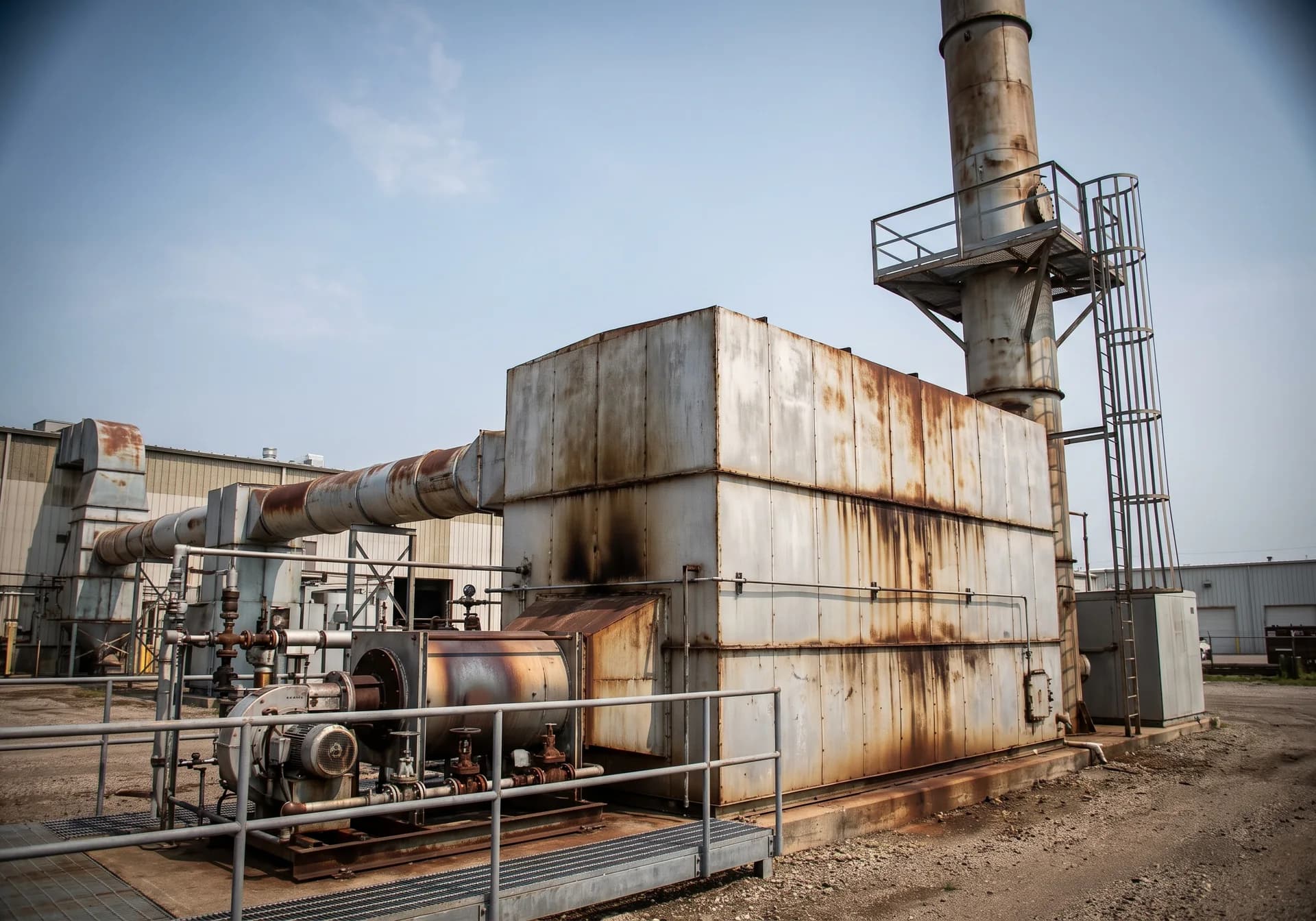
PBF Energy's Chalmette Refinery and Shell's Norco Manufacturing Complex anchor the lower Mississippi River corridor's refining and chemical operations near New Orleans. These facilities operate thermal oxidizers on process vents, sulfur recovery unit tail gas treatment systems, flare gas recovery installations, and tank farm vapor destruction equipment. The extreme humidity of the New Orleans area accelerates corrosion on thermal oxidizer casings, ductwork, and structural supports, particularly on equipment located in outdoor installations near the river. Refractory in thermal oxidizers exposed to Gulf Coast humidity can absorb moisture during shutdowns, leading to spalling and accelerated degradation when the unit returns to operating temperature. Falcon provides corrosion inspection, refractory assessment, burner tuning, and NFPA safety inspections on refinery and chemical plant pollution control equipment, with particular attention to the moisture-related degradation mechanisms specific to the lower Mississippi corridor operating environment.
Petroleum and chemical transfer terminals along the Mississippi River in the New Orleans metro area operate vapor recovery units, thermal vapor destruction units, and marine vapor control systems that handle emissions during barge and ship loading operations. These systems must comply with both LDEQ air quality requirements and US Coast Guard regulations governing marine terminal vapor control (33 CFR 154). The intermittent operating pattern of marine terminal vapor control equipment creates thermal cycling stress, and the river environment adds humidity and corrosion exposure that compounds the maintenance challenge. Vapor control system components including detonation arrestors, pressure/vacuum valves, and emergency shutdown devices require periodic inspection and testing per Coast Guard regulations in addition to LDEQ and NFPA requirements. Falcon provides maintenance programs for marine terminal vapor control systems that address the full range of regulatory requirements from LDEQ air permits through Coast Guard 33 CFR 154 compliance.
Pollution control equipment in the New Orleans area must be designed, maintained, and operated with hurricane season as a constant consideration. Thermal oxidizers and scrubber systems at facilities in the hurricane zone need emergency shutdown procedures that protect equipment from flood damage, wind-driven debris, and power loss. Post-storm recovery requires systematic inspection of refractory for thermal shock damage from rapid cooling, verification of burner system ignition components that may have been exposed to flooding, and scrubber system flushing to remove storm water contamination. Falcon provides pre-season inspection and storm preparation services, post-storm damage assessment and rapid repair, and emergency startup support for facilities working to restore pollution control equipment operation after weather events. Our technicians understand the urgency of post-hurricane restart and prioritize service to get emission control systems operational before production resumes.
The compliance landscape for industrial operations in the New Orleans region.
Louisiana industrial operations fall under the Louisiana Department of Environmental Quality (LDEQ), which administers air, water, and waste permits under Louisiana Administrative Code (LAC) Title 33. The lower Mississippi River corridor between New Orleans and Baton Rouge falls within LDEQ Regions 2 and 9, and facilities in this area face increased scrutiny due to environmental justice concerns. LDEQ requires source testing to demonstrate thermal oxidizer and scrubber destruction or removal efficiency, with continuous parametric monitoring between tests. NFPA 86 and NFPA 87 apply to combustion-based pollution control equipment. The US Coast Guard maintains authority over marine terminal vapor control systems under 33 CFR 154, adding regulatory requirements beyond LDEQ for facilities with waterfront transfer operations. Federal EPA requirements including NSPS, NESHAP, and RMP layer on top of LDEQ permits. The environmental justice focus on the lower Mississippi corridor means that permit applications for new or modified pollution control equipment may receive heightened public scrutiny and additional conditions beyond standard permit terms. Facilities should expect that maintaining pollution control equipment in documented compliance is essential not just for regulatory reasons but for preserving community operating license in this closely watched industrial corridor.
Engineered for Reliability. Built for the Field.
Our engineering services tailored to the specific needs of New Orleans-area industrial facilities.
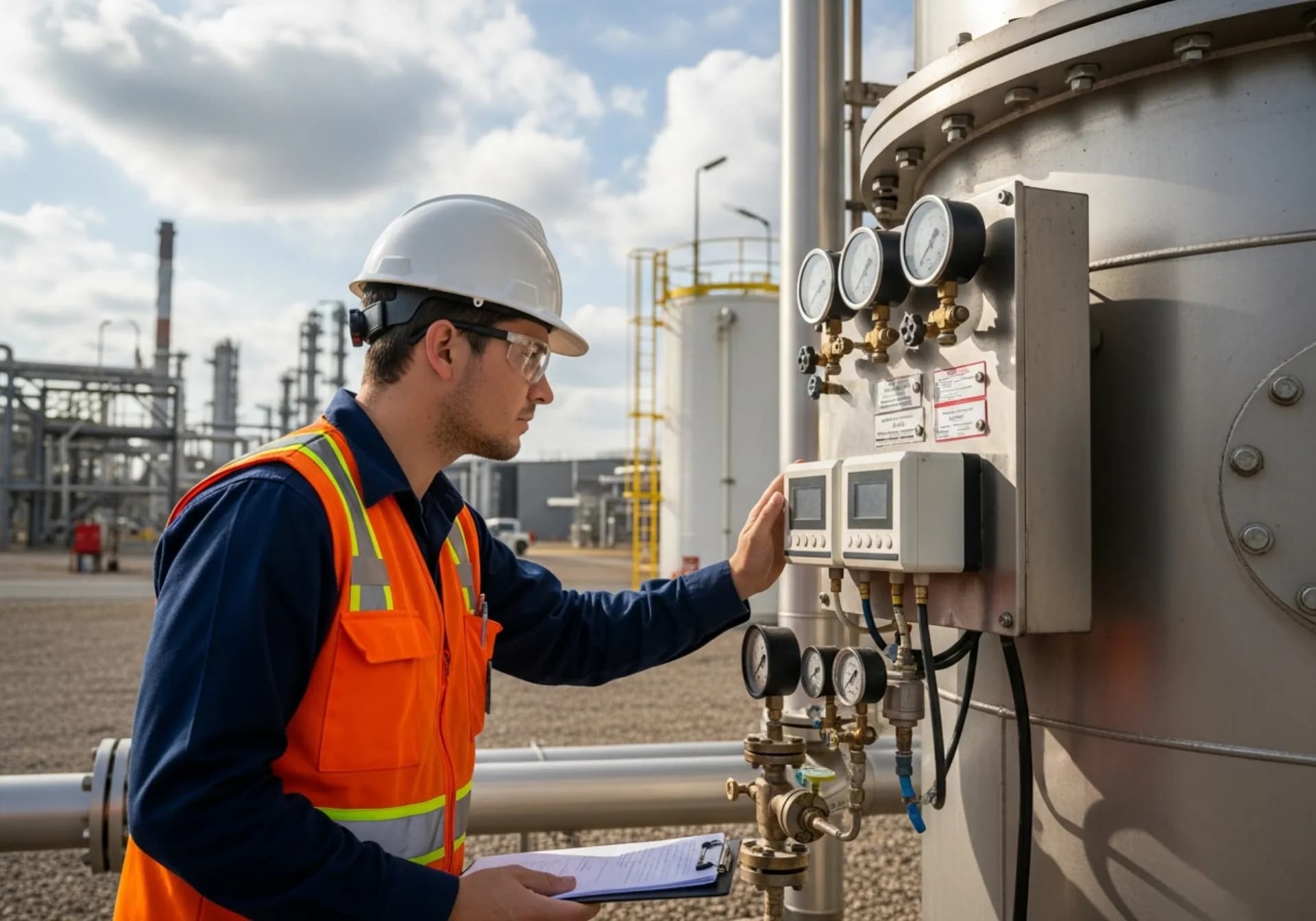
Falcon Environmental Solutions serves New Orleans and the lower Mississippi River corridor with pollution control equipment services adapted to the demanding Gulf Coast operating environment. Burner tuning and combustion optimization address thermal oxidizers, RTOs, and fired heaters at LNG terminals, refineries, chemical plants, and fabrication facilities. NFPA 86 and NFPA 87 safety inspections cover flame safeguard systems, gas train integrity, and emergency shutdown capability on all combustion-based pollution control equipment.
Scrubber maintenance programs serve amine scrubbers at LNG facilities, packed bed acid gas scrubbers at chemical plants, and marine terminal vapor control system components. Environmental consulting navigates LDEQ permitting, Coast Guard marine terminal requirements, and the heightened public scrutiny facing facilities in the lower Mississippi corridor. Hurricane preparedness services include pre-season inspection, storm shutdown planning, post-storm damage assessment, and rapid recovery support.
System upgrades and new construction services include thermal oxidizer retrofits, scrubber installations, and controls modernization performed in partnership with Creekmist Controls and MAK Solutions. The FalconWatch monitoring platform, developed by partner Creekmist Controls, provides continuous remote monitoring of pollution control equipment parameters, which is particularly valuable for Gulf Coast facilities that may be inaccessible during weather events.
The New Orleans industrial environment operates under conditions that demand specialized local knowledge. Hurricane season is not an abstract risk but an annual reality that shapes how pollution control equipment is designed, maintained, and operated. The corrosive Gulf Coast atmosphere degrades equipment faster than inland environments, and the humidity-related damage mechanisms specific to thermal oxidizer refractory and scrubber internals in coastal Louisiana require service approaches tuned to these conditions.
The regulatory overlay of LDEQ, Coast Guard, and EPA environmental justice enforcement adds compliance complexity. The offshore fabrication industry's schedule pressures and the LNG sector's operational demands create service timelines that require a responsive local presence. Falcon Environmental Solutions delivers the Gulf Coast expertise and rapid-response capability that New Orleans-area pollution control equipment operators require.
Falcon Environmental Solutions delivers industrial automation and environmental compliance services engineered for the New Orleans market. Contact us to discuss your project requirements and receive a detailed engineering proposal.
Falcon Environmental Solutions provides industrial automation services across the country.