Industrial automation, PLC programming, SCADA systems, and environmental compliance solutions for Detroit and the greater Michigan region.
Detroit and Southeast Michigan host the highest concentration of regenerative thermal oxidizers (RTOs) per square mile of any industrial region in the United States, driven by the automotive industry's massive paint shop operations. Every vehicle that rolls off an assembly line passes through a multi-stage painting process that generates enormous volumes of solvent-laden exhaust, and every one of those paint shops depends on large-scale RTOs to destroy the VOCs before atmospheric release. Ford's Rouge Center in Dearborn, General Motors' Factory ZERO in Hamtramck, Stellantis' Jefferson North and Warren Truck Assembly plants, and the sprawling network of Tier 1 supplier stamping, coating, and finishing operations across the metro area collectively operate dozens of RTO installations that represent some of the most demanding pollution control service applications in any industry.
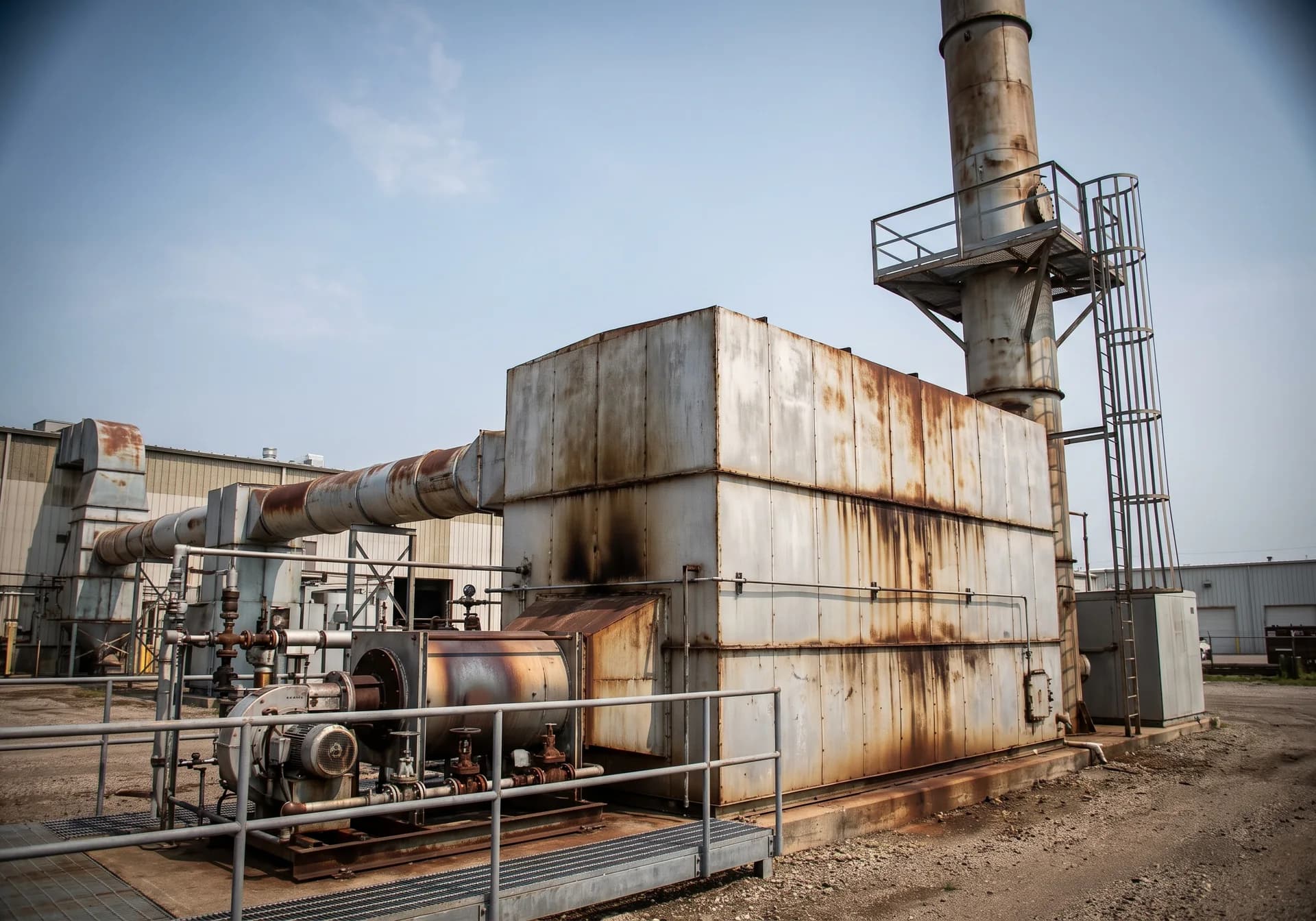
The RTO installations at automotive paint shops are enormous, with individual units processing 100,000 CFM or more of paint booth exhaust through ceramic heat exchange media beds that recover thermal energy while maintaining combustion chamber temperatures above 1,500 degrees Fahrenheit. These units cycle continuously through inlet, outlet, and purge modes using large pneumatic or hydraulic valve assemblies, and the ceramic media beds gradually accumulate paint overspray particulate, condensed organic compounds, and degraded media fragments that reduce thermal efficiency and increase pressure drop over time. The burner systems must maintain precise temperature control across the full production range, from maximum paint application during peak shifts to reduced loading during line changeovers and weekends.
Beyond automotive assembly, the Detroit metro area's coatings manufacturing sector (Axalta, PPG, BASF Coatings), steel processing operations (Cleveland-Cliffs), and chemical production facilities all operate thermal oxidizers, catalytic oxidizers, and scrubber systems with their own service requirements. The electric vehicle transition is adding new pollution control challenges as battery manufacturing facilities introduce NMP (N-methyl pyrrolidone) solvent recovery and destruction systems and process exhaust treatment for electrode coating and electrolyte handling operations.
Contact us to discuss your industrial automation and environmental compliance requirements for your Detroit-area facility.
Request a QuoteThe major industrial sectors in the Detroit region that depend on reliable process control and environmental monitoring.
The Big Three automakers and their major assembly partners operate paint shop RTO systems across Southeast Michigan that are among the largest individual pollution control installations in any manufacturing sector. A typical automotive paint shop RTO handles 80,000 to 150,000 CFM of exhaust air from spray booths, flash-off zones, and oven exhaust, running three beds of ceramic heat exchange media that achieve 95% or higher thermal energy recovery. The media beds in automotive RTOs accumulate paint overspray and condensed organic compounds that progressively reduce airflow and thermal efficiency. Hot-side ceramic media inspection requires specialized access procedures in confined spaces at elevated temperatures. Valve timing between beds must be precisely calibrated to prevent untreated exhaust from bypassing the combustion chamber during switching cycles. Falcon Environmental Solutions provides comprehensive RTO maintenance for automotive paint shop installations, including hot-side media inspection, media cleaning and replacement, valve actuator service and timing calibration, combustion chamber refractory assessment, burner tuning for variable production loads, and NFPA 86 safety system inspections.
Hundreds of Tier 1 and Tier 2 automotive suppliers across the Detroit metro area operate paint lines, powder coating systems, e-coating operations, and specialty finishing processes that generate VOC emissions controlled by thermal oxidizers, catalytic oxidizers, and RTOs. These supplier facilities range from large operations with dedicated pollution control equipment to smaller shops that share oxidizer capacity across multiple coating lines through common exhaust duct manifolds. The variable loading patterns created by job-shop production schedules, where different parts with different coating specifications run on the same line throughout a shift, challenge thermal oxidizer burner systems designed for steady-state operation. Catalytic oxidizers at supplier facilities face catalyst contamination from powder coat overspray, phosphate conversion coating fumes, and other process-specific contaminants. Falcon services the full range of pollution control equipment at automotive supplier coating operations, including catalyst activity testing, burner optimization for variable-load applications, and compliance preparation for Michigan EGLE air permit requirements.
Axalta Coating Systems, PPG, BASF Coatings, and numerous smaller coatings and chemical manufacturers in Southeast Michigan produce automotive paints, industrial coatings, adhesives, and sealants in facilities that operate thermal oxidizers and scrubbers on production exhaust. Batch mixing, dispersion milling, tinting, and filling operations use solvents that generate variable-composition VOC emissions as different product formulations run through the same production equipment. The thermal oxidizers at coatings plants must handle these variable organic loading profiles without temperature excursions that damage refractory or structural components. Scrubber systems at chemical operations handle acid gas emissions from HCl, SO2, and other corrosive compounds produced during synthesis and formulation. Falcon provides burner tuning for variable-load thermal oxidizers, scrubber internal inspection and packing maintenance, and NFPA safety assessments at coatings and chemical manufacturing facilities across the region.
Detroit's electric vehicle transition is introducing new categories of pollution control equipment to the region. Battery electrode coating operations use NMP solvent that generates VOC emissions requiring thermal destruction or solvent recovery. Electrolyte handling areas produce trace emissions of lithium hexafluorophosphate decomposition products including hydrogen fluoride, requiring scrubber systems for acid gas control. Dry room and cleanroom HVAC systems at battery cell assembly facilities use desiccant dehumidifiers that may require thermal reactivation systems with their own emission control needs. These battery manufacturing pollution control applications are new to the Detroit industrial landscape, and the equipment serving them requires service providers who understand both the pollution control technology and the unique process context of battery production. Falcon brings thermal oxidizer and scrubber service expertise to this emerging sector, adapting proven service methodologies to the specific challenges of battery manufacturing emission control.
Cleveland-Cliffs operates the Dearborn Works integrated steelmaking complex producing advanced automotive steels, and numerous steel service centers across the metro area run slitting, blanking, galvanizing, and coating operations. Galvanizing lines produce zinc fume emissions controlled by baghouse dust collectors, while pickling lines generate hydrochloric acid mist captured by packed bed scrubbers. Coating lines on steel service center operations use solvent-based or waterborne coatings with thermal oxidizers on the exhaust. The heavy industrial environment at steel processing facilities demands pollution control equipment that withstands extreme heat, heavy particulate loading, and corrosive acid gas exposure. Falcon services scrubber systems at pickling operations, performs burner tuning on coating line thermal oxidizers, and conducts NFPA inspections on all combustion-based pollution control equipment at steel and metals facilities.
The compliance landscape for industrial operations in the Detroit region.
Michigan industrial operations fall under the Michigan Department of Environment, Great Lakes, and Energy (EGLE), which administers air quality permits through Renewable Operating Permits (ROPs) and Permits to Install (PTIs) under Michigan Air Pollution Control Rules (R 336). Southeast Michigan is in the Detroit-Ann Arbor ozone nonattainment area, triggering RACT requirements for VOC and NOx that directly affect pollution control equipment performance standards. Automotive paint shop RTOs are specifically addressed in Michigan's RACT rules, with destruction efficiency requirements tied to the specific coating types used. EGLE requires source testing to demonstrate thermal oxidizer and RTO destruction efficiency, with continuous combustion chamber temperature monitoring as the parametric compliance indicator between tests. NFPA 86 applies to all thermal oxidizers and RTOs classified as industrial ovens, requiring documented safety inspections of flame safeguard systems, gas trains, valve assemblies, and emergency shutdowns. Michigan OSHA (MIOSHA) enforces workplace safety standards for confined space entry during RTO media inspection and maintenance. The Great Lakes Water Quality Agreement imposes additional restrictions on bioaccumulative chemicals of concern that can affect scrubber blowdown discharge permits. EGLE enforcement in the Detroit area is active, with particular attention to automotive sector compliance given the large emission volumes involved.
Engineered for Reliability. Built for the Field.
Our engineering services tailored to the specific needs of Detroit-area industrial facilities.
Falcon Environmental Solutions provides Southeast Michigan with specialized pollution control equipment service centered on the automotive industry's demanding RTO and thermal oxidizer applications. RTO maintenance services include hot-side ceramic media inspection, media cleaning and replacement, valve timing calibration, purge cycle optimization, and combustion chamber refractory assessment. Burner tuning covers the full range of RTO, thermal oxidizer, and catalytic oxidizer burner systems found across automotive assembly, supplier coating, and chemical manufacturing facilities.
NFPA 86 safety inspections document flame safeguard operation, gas train integrity, valve assembly function, and emergency shutdown capability. Scrubber service addresses packed bed and venturi scrubbers at steel processing, chemical, and emerging battery manufacturing facilities. Environmental consulting helps Detroit-area manufacturers navigate EGLE permitting for pollution control equipment modifications and prepare for compliance source tests.
System upgrades include RTO media bed refurbishment, burner system modernization, and controls upgrades performed in partnership with Creekmist Controls and MAK Solutions. The FalconWatch monitoring platform, developed by partner Creekmist Controls, gives automotive and manufacturing facilities continuous remote visibility into RTO combustion temperatures, valve cycle timing, pressure differentials, and other critical operating parameters.
Detroit's automotive manufacturing culture operates on model-year development cycles that compress paint shop equipment maintenance into tight shutdown windows where every hour counts. An RTO service provider who understands the production launch cadence, the plant shutdown scheduling process, and the urgency of getting pollution control equipment back online before production restarts provides value that outside firms cannot replicate. The EV transition adds complexity, as battery manufacturing introduces pollution control equipment types that are new to the Detroit industrial landscape.
Michigan's EGLE regulatory framework, the MIOSHA confined space requirements for RTO media work, and the Great Lakes environmental protections create compliance obligations specific to this region. Falcon Environmental Solutions provides Detroit-area clients with the automotive industry knowledge, RTO service specialization, and regulatory expertise that this market requires.
Falcon Environmental Solutions delivers industrial automation and environmental compliance services engineered for the Detroit market. Contact us to discuss your project requirements and receive a detailed engineering proposal.
Falcon Environmental Solutions provides industrial automation services across the country.