Industrial automation, PLC programming, SCADA systems, and environmental compliance solutions for Pittsburgh and the greater Pennsylvania region.
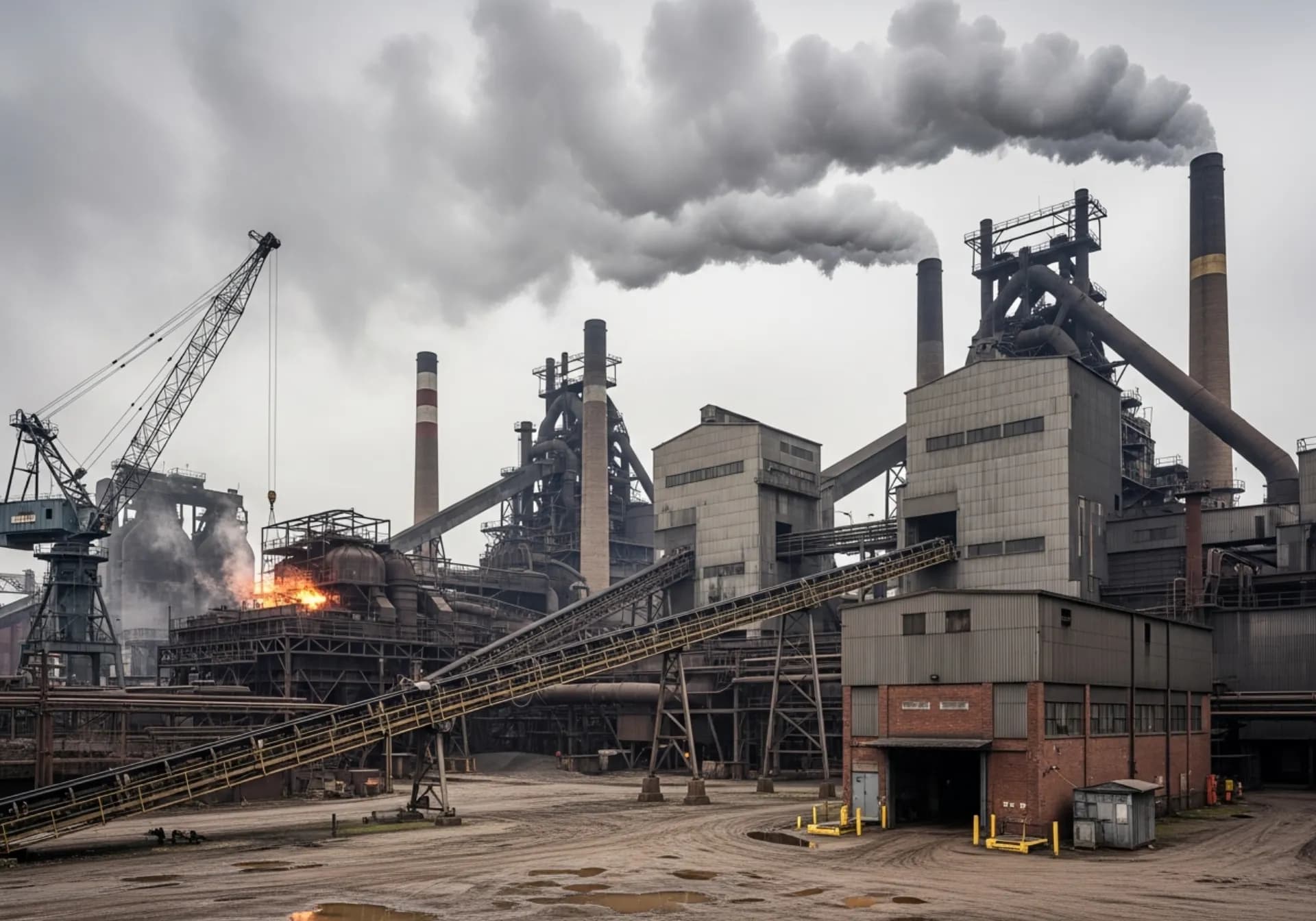
Pittsburgh's industrial landscape has undergone a dramatic transformation over the past two decades, and the pollution control equipment serving the region reflects both the legacy steel industry that built the city and the natural gas processing and petrochemical sector that is reshaping its economic future. The Marcellus and Utica shale formations beneath Southwestern Pennsylvania have turned the region into one of the largest natural gas producing areas in the country, spawning cryogenic processing plants, compressor stations, and pipeline infrastructure that operate thermal oxidizers, flare systems, and emission control equipment across rural Washington, Greene, and Westmoreland counties. Shell Polymers' ethane cracker in Beaver County (Monaca) represents a $6 billion petrochemical investment with thermal oxidizers, selective catalytic reduction systems, and cooling water treatment that brought Gulf Coast-scale pollution control technology to Appalachian Pennsylvania.
The legacy steel industry continues to operate major pollution control installations in the Mon Valley. US Steel's Clairton Coke Works is the largest merchant coke plant in the United States and operates an extensive array of scrubbers, thermal oxidizers, and emission control systems that are under constant regulatory and community scrutiny. The coke oven gas desulfurization systems, benzene emission controls, and pushing emission capture equipment at Clairton represent some of the most complex and heavily monitored pollution control installations in Pennsylvania. ATI (Allegheny Technologies) operates specialty alloy production in Brackenridge and Natrona Heights with thermal oxidizers, scrubbers, and fume collection systems on melting and processing operations.
The combination of emerging natural gas midstream operations, new petrochemical manufacturing, and legacy steel industry pollution control creates a unique service market where equipment ranges from brand-new Shell cracker SCR systems to decades-old coke plant scrubbers, and regulatory oversight comes from both PA DEP and the Allegheny County Health Department, which maintains independent air quality authority within Allegheny County.
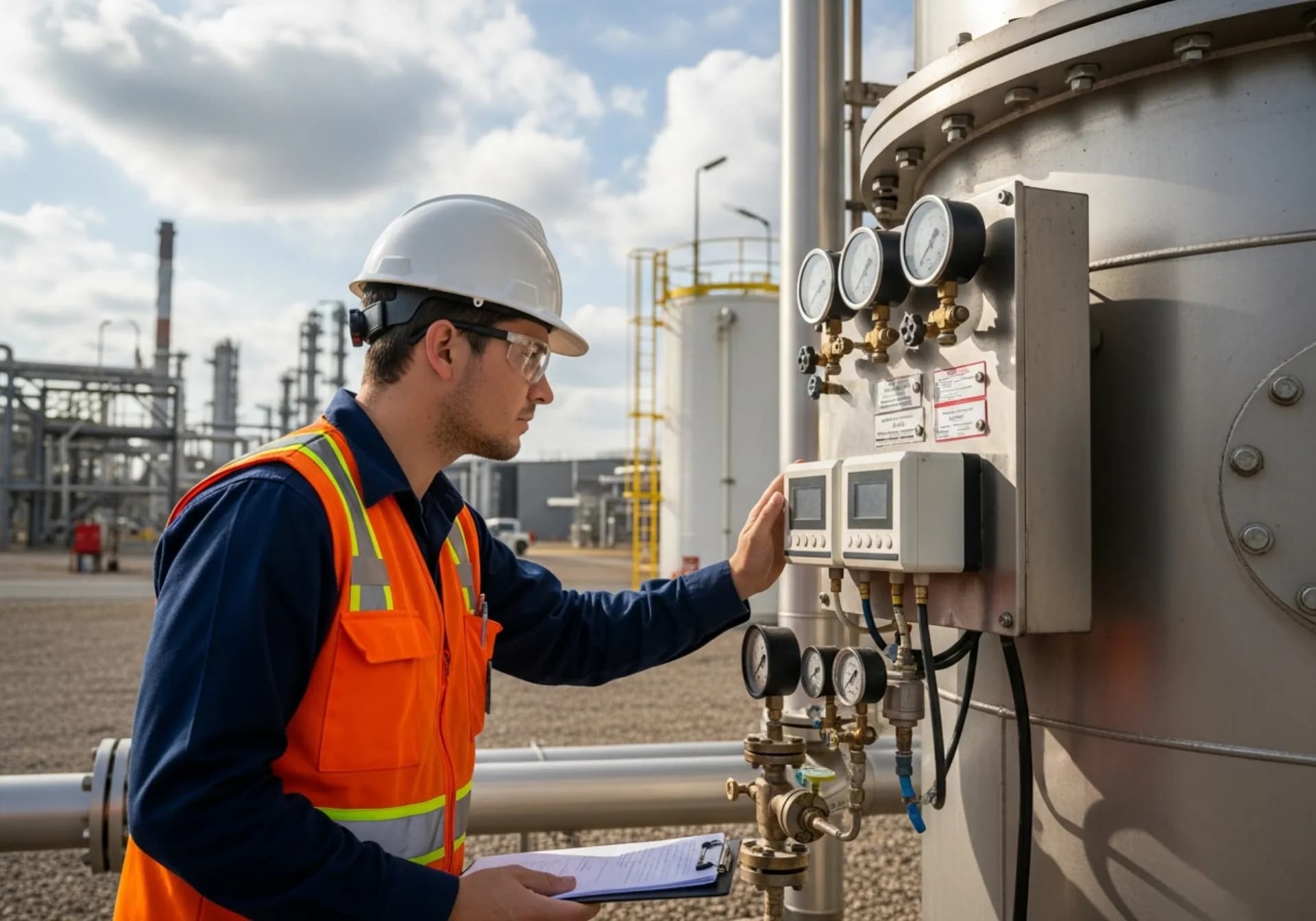
Contact us to discuss your industrial automation and environmental compliance requirements for your Pittsburgh-area facility.
Request a QuoteThe major industrial sectors in the Pittsburgh region that depend on reliable process control and environmental monitoring.
Cryogenic gas processing plants operated by Equitrans Midstream, MPLX, and CNX Resources in Washington, Greene, and Butler counties separate natural gas liquids from raw Marcellus gas using turboexpander and fractionation processes. These facilities operate thermal oxidizers on process vents, flare systems for emergency and routine releases, and compressor engines or turbines with catalytic converters or oxidation catalysts for CO and VOC control. Compressor stations across the region run reciprocating engines and gas turbines that produce NOx, CO, and formaldehyde emissions requiring catalytic treatment or thermal destruction. Leak detection and repair (LDAR) programs at gas processing plants use continuous monitoring systems to identify and quantify fugitive emissions from valves, flanges, and compressor seals. Falcon Environmental Solutions provides burner tuning on process vent thermal oxidizers, catalyst management for compressor engine emission controls, NFPA safety inspections on all combustion-based devices, and flare system maintenance across the natural gas midstream sector.
Shell Polymers' Monaca ethane cracker operates ethane cracking furnaces, quench and compression systems, polymerization reactors, and pelletizing lines with a comprehensive pollution control system including selective catalytic reduction (SCR) for NOx control on the cracking furnaces, thermal oxidizers for VOC destruction on process vents, and cooling water treatment systems designed to meet PA DEP thermal discharge limits for the Ohio River. The SCR systems use ammonia or urea injection into flue gas streams passing over vanadium or titanium-based catalyst beds that selectively reduce NOx to nitrogen and water. These catalyst beds require periodic activity testing, cleaning, and eventual replacement as they deactivate through exposure to sulfur compounds, alkali metals, and arsenic in the flue gas. Falcon provides SCR catalyst management, thermal oxidizer burner tuning, NFPA safety inspections, and refractory assessment at the Shell cracker and associated downstream operations.
US Steel's Clairton Coke Works operates coke oven gas desulfurization scrubbers, benzene emission control systems, pushing emission capture and control devices, and thermal oxidizers that collectively represent the most heavily regulated pollution control installation in the Pittsburgh region. The coke oven gas scrubbers use chemical absorption processes to remove hydrogen sulfide before the gas is used as fuel, requiring careful solution chemistry management and regular packed bed maintenance. The Allegheny County Health Department (ACHD) maintains a specific enforcement focus on Clairton, with emission monitoring and reporting requirements that exceed standard PA DEP permit conditions. ATI's specialty metals operations use thermal oxidizers and scrubbers on melting furnace exhaust containing metal fumes, organic binder decomposition products, and acid gases. Falcon services the full range of pollution control equipment at steel and metals operations, including scrubber system maintenance, thermal oxidizer burner tuning, and compliance documentation formatted for ACHD and PA DEP review.
Southwestern Pennsylvania's natural gas supply supports combined cycle gas-fired power plants that produce NOx and CO emissions controlled by SCR and oxidation catalyst systems. The region's interest in carbon capture, utilization, and storage (CCUS) is creating emerging demand for monitoring and maintenance of CO2 compression, dehydration, and pipeline transport equipment with associated emission controls. Legacy coal-fired generating stations in various stages of retirement or conversion operated extensive pollution control trains including SCR, electrostatic precipitators, wet scrubbers for SO2 (flue gas desulfurization), and activated carbon injection for mercury control. Some of these systems continue to operate during facility transitions or partial retirement. Falcon provides catalyst management for power plant SCR systems, scrubber maintenance for FGD equipment, and NFPA safety inspections on combustion-based pollution control devices across the energy generation sector.
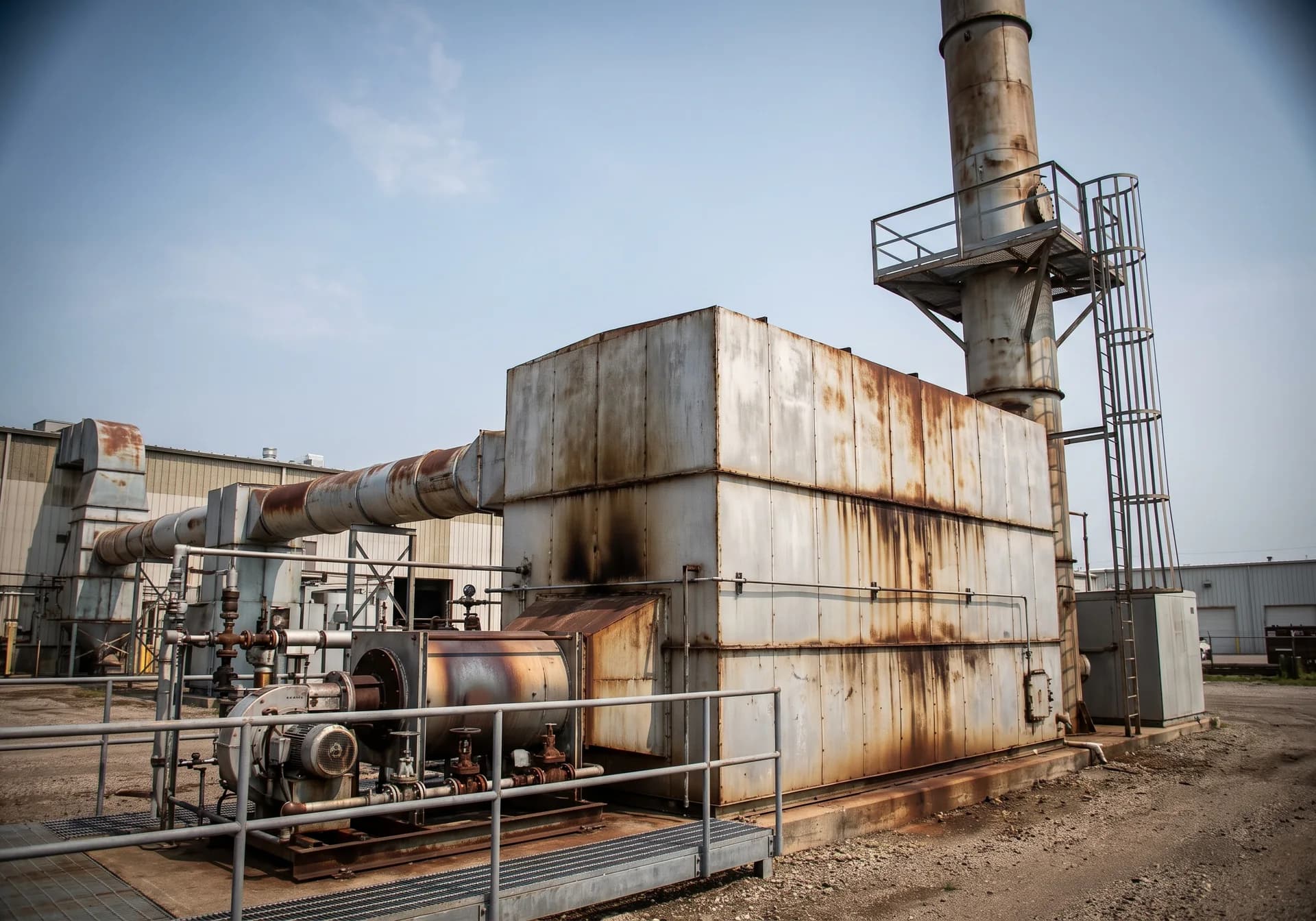
Southwestern Pennsylvania's broader manufacturing base includes glass production, coatings manufacturing, rubber and plastics processing, and food production operations that use thermal oxidizers, catalytic oxidizers, and scrubber systems for emission control. PPG Industries, headquartered in Pittsburgh, operates glass manufacturing and coatings production with thermal oxidizers on furnace exhaust and coating line ventilation. Smaller manufacturers across the region run aging thermal oxidizer and catalytic oxidizer equipment that may be 15 to 25 years old and approaching the point where refurbishment or replacement decisions become critical. Falcon provides equipment condition assessments that help facility managers evaluate whether existing pollution control equipment can be economically maintained or should be replaced, along with ongoing burner tuning, catalyst management, and NFPA safety inspection services that extend equipment life and maintain compliance.
The compliance landscape for industrial operations in the Pittsburgh region.
Southwestern Pennsylvania industrial facilities navigate a dual regulatory structure for air quality. PA DEP's Southwest Regional Office administers air permits under 25 Pa. Code Chapter 127 for facilities outside Allegheny County, while the Allegheny County Health Department (ACHD) maintains separate and independent authority over air quality permits and enforcement within Allegheny County. ACHD has historically taken aggressive enforcement positions, particularly regarding Clairton Coke Works and other Mon Valley facilities, and its permit conditions and emission standards can differ from PA DEP requirements. Facilities in Allegheny County must obtain air permits from ACHD rather than PA DEP. Natural gas industry pollution control equipment is regulated under 25 Pa. Code Chapter 78a and federal NSPS Subpart OOOOa for methane and VOC emissions. NFPA 86 applies to all thermal oxidizers, and Pennsylvania's Boiler and Unfired Pressure Vessel Law adds state-specific requirements. PA DEP has been tightening requirements on natural gas midstream emission controls, with increased focus on compressor station thermal oxidizer performance and LDAR program effectiveness. The combination of the ACHD's aggressive approach in Allegheny County and PA DEP's evolving midstream regulations across the broader region creates a compliance environment where maintaining well-documented pollution control equipment performance records is essential.
Engineered for Reliability. Built for the Field.
Our engineering services tailored to the specific needs of Pittsburgh-area industrial facilities.
Falcon Environmental Solutions serves Southwestern Pennsylvania with pollution control equipment service spanning the region's natural gas midstream, petrochemical, steel, and general manufacturing sectors. Burner tuning and combustion optimization cover thermal oxidizers at gas processing plants, the Shell cracker, steel operations, and general manufacturing. SCR catalyst management serves the selective catalytic reduction systems at the Shell cracker and power generation facilities.
NFPA 86 safety inspections cover all combustion-based pollution control devices across the region. Scrubber maintenance addresses coke oven gas desulfurization systems, acid gas scrubbers at chemical and metals operations, and FGD systems at power plants. Environmental consulting helps facilities navigate the dual ACHD/PA DEP regulatory structure and the evolving methane and VOC requirements for natural gas operations.
System upgrades and new construction include thermal oxidizer installations, scrubber modifications, and controls upgrades performed in partnership with Creekmist Controls and MAK Solutions. The FalconWatch monitoring platform, developed by partner Creekmist Controls, provides continuous remote monitoring for the geographically distributed natural gas midstream facilities spread across the rural hilltops of Southwestern Pennsylvania, where site visits can require significant travel time and reliable remote monitoring is operationally critical.
Pittsburgh's industrial landscape spans two distinct regulatory jurisdictions and multiple industry sectors that are geographically interleaved but operationally very different. Pollution control equipment at a coke works in the Mon Valley operates under ACHD authority with intensive community and media scrutiny, while a gas processing plant thermal oxidizer 30 miles south in Washington County falls under PA DEP with a completely different permitting process and inspection culture. An equipment service provider who can navigate both regulatory environments credibly brings unique value to the region.
The natural gas midstream sector adds the challenge of extremely distributed assets across rural Appalachian terrain where winter weather, limited cell coverage, and difficult access roads complicate service scheduling. Falcon Environmental Solutions provides the cross-sector expertise and regional presence that Pittsburgh's diverse pollution control equipment base demands.
Falcon Environmental Solutions delivers industrial automation and environmental compliance services engineered for the Pittsburgh market. Contact us to discuss your project requirements and receive a detailed engineering proposal.
Falcon Environmental Solutions provides industrial automation services across the country.